
🌳25 Backyard Tree Ideas for Shade, Privacy & Low-Fuss
Looking for a trusted forestry mulching company? 🌲 Guilmer Tree Services delivers efficient mulching with modern equipment, licensed crews, and clear, itemized quotes so you know exactly what you’re paying for. We handle brush, small trees, and site prep while minimizing soil disturbance and speeding site recovery.
7 min read
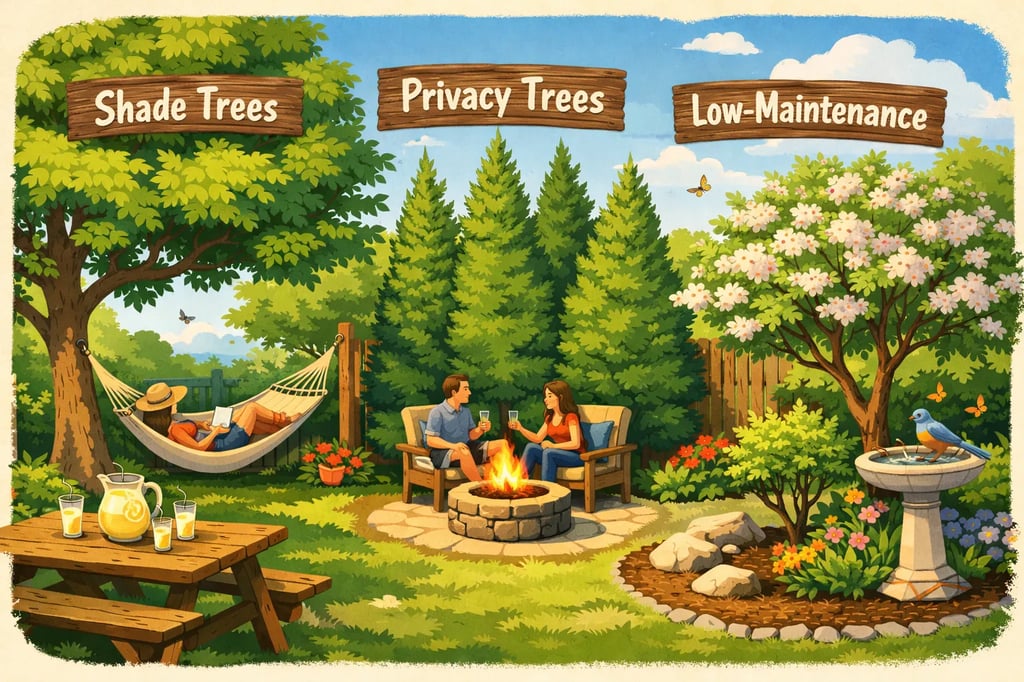
Too much sun on the patio, a fence-line where you want privacy, roots cracking the lawn, or a tiny yard that needs smart choices—sound familiar? At Guilmer Tree Services we help neighbors turn yards into usable shade, private retreats, and low‑care garden rooms. Read on and, by the end, you’ll be able to choose appropriate trees, pick one of 25 tested layout ideas, position them correctly, and plant under the canopy without harming roots.
Match trees to your yard size: quick picks and what those numbers mean
Look for two numbers on any tree tag: mature height (how tall it will get) and mature spread (how wide the crown will grow). Height dictates power‑line and house clearance; spread tells you how close to fences and foundations a tree can safely sit. Use both, not the current size.
Kousa dogwood (Cornus kousa) — compact, spring flowers, needs afternoon‑shade protection and steady summer water. Japanese maple (Acer spp.) — many dwarf cultivars; avoid harsh afternoon sun. Fringe tree (Chionanthus virginicus) — fragrant spring bloom, low pruning. Evergreen magnolia — year‑round screening with large leaves; needs space from foundations for leaf drop.
Emerald Green arborvitae — narrow evergreen screen; minimal pruning. Cryptomeria — fragrant, fast-growing columnar option. Flowering dogwood (Cornus florida) — classic under‑canopy bloom and dappled shade. Japanese snowbell (Styrax japonicus) — elegant canopy for patios and mid‑yard planting.
Small yards (under ~20 ft mature)
Medium yards (20–40 ft)
Large yards (40+ ft)
Thuja ‘Green Giant’ — fast tall screen for privacy. Carolina Sapphire cypress — blue tone evergreen for year‑round color. English yew — dense shade and structure where hardiness allows. Northern red oak — classic long‑term shade and wildlife benefits.
Practical spacing at a glance: small trees 8–10 ft from a house wall; medium trees ~15 ft; large trees 20+ ft. From a fence, plant about two‑thirds of the tree’s mature width away. Keep underground utilities at least 6–10 ft clear and leave a power‑line buffer equal to the expected mature height. When in doubt, book a free site visit with our licensed and insured crew to confirm placement.
Below are 25 compact concepts grouped by goal. Each idea names a species or two and a quick planting tip so you can visualize placement fast.
25 backyard tree design ideas you can actually plant this weekend
Shade-focused
Single specimen shade tree at the patio — plant a medium maple or red oak 15–20 ft from the house so afternoon sun is shaded without crowding the roof.
Small multi‑stem shade near seating — use a Japanese maple or Fringe tree to shade a bistro set without overpowering the space.
Dappled shade corridor down a lawn — stagger two medium trees (flowering dogwood + Japanese snowbell) to form a canopy walk for a lawn path.
Shade and composting corner — site a drought‑tolerant bur oak near a rain barrel and keep a wide mulch ring to protect roots and compost activity.
Pavilion shade using paired trees — plant twins (e.g., two red maples) to define a picnic area with a natural overhead canopy.
Shade for vegetable beds — place a filtered‑shade tree to the north of raised beds so they still get morning sun.
Privacy and screening
Evergreen privacy hedge — Emerald Green arborvitae in a staggered row spaced about two‑thirds of mature width apart for year‑round screening.
Blue‑tone screen — Carolina Sapphire cypress for color and privacy along a fence line.
Privacy with seasonal flowers — alternate flowering dogwood and crape myrtle for bloom and density through spring and summer.
Layered privacy (trees + shrubs) — plant Thuja Green Giants at the back and a lower evergreen hedge in front for depth.
Living corner fence replacement — dense English yew or eastern redcedar at property corners for strong, evergreen massing (observe utility clearances).
Low‑height visual barrier — multi‑stem crape myrtles in front of a short fence for privacy without full shade.
Small‑yard and focal ideas
Pocket specimen in a planting bed — a single Japanese maple as a focal anchor with a 3–6 ft mulch ring.
Container tree on a deck — dwarf magnolia or crabapple in a large pot, paired with shady container plantings like hostas.
Narrow strip screening — columnar cryptomeria or Emerald Green planted in a tight line for narrow spaces.
Mini orchard — two dwarf fruit trees placed for pollination and clustered to minimize lawn footprint.
Low‑maintenance / drought‑tolerant layouts
Native low‑water canopy — bur oak or Kentucky coffee tree with a wide mulch ring and drip irrigation for minimal fuss.
Gravel‑mulch understory — Eastern redcedar in a rock garden with tolerant groundcovers for low maintenance.
Low‑care privacy border — Thuja Green Giant row that needs only light pruning after establishment.
Pollinator‑friendly planting — native oak with a meadowy understory of perennials for a hands‑off ecosystem.
Under‑tree planting & layered beds
Shaded woodland bed — hostas, lungwort and ferns under a dogwood or snowbell to create a cool understory.
Colorful edge under maples — coral bells, astilbe and ajuga for spring‑to‑fall interest below a maple canopy.
Dry‑shade carpet — pachysandra or ajuga under a mature oak where grass fails.
Root‑friendly perennial ring — a wide mulch ring with seasonal bulbs and pots placed near the trunk edge.
Mulch paths and seating niches — carve a curved mulch path and tuck a bench under a specimen tree for a quiet nook.
Planting distances and placement — avoid costly mistakes later
Concrete rules save money: a tree with a 30‑ft mature canopy should sit roughly 20 ft from a house and 20 ft from a driveway. For fences, plant about two‑thirds of the mature width away (a 30‑ft wide tree → ~20 ft from the fence). Keep underground utilities at least 6–10 ft clear; ideal is 10 ft. Avoid planting aggressive‑rooted species (willow, poplar, silver maple) near pipes. For more on giving trees the room they need, see guidance on spacing trees correctly.
Power lines require careful planning by expected height: trees under 20 ft can go beneath lines; trees 21–45 ft need 20–50 ft clearance; specimens taller than 46 ft should be a safe 50+ ft away. Always call your utility company for line guidance and dial 811 before digging — and remember the basic idea: plant the right tree in the right place to avoid conflicts later.
Draft a simple planting map: measure house footprint, fence lines, driveways and existing trees; mark visible utility boxes; then place your chosen species using the spacing rules above. If that map raises questions, book Guilmer Tree Services for a free on‑site estimate and placement check.
Landscaping around roots & planting under canopies without harm
Core rules: do not pile soil over roots; use 2–4 inches of organic mulch (shredded hardwood bark preferred) and keep mulch 12–18 inches away from the trunk. Widen the mulch bed rather than mounding it—roots like horizontal space. For high‑traffic paths use pea gravel or stepping stones rather than concrete over roots. For approaches on how to cover exposed tree roots without damage, review professional recommendations before you begin.
Choose shallow‑rooted, shade‑tolerant plants: ajuga, pachysandra, lungwort, hostas, astilbe, heuchera and mahonia handle root competition. Plant outside the drip line when possible; if planting near the trunk, keep a 3–6 ft ring of ornamentals and maintain a mulch-to-drip‑line bed. Additional options for groundcovers for shade can help you pick understory plants that thrive beneath trees.
Protect roots from compaction with low fencing, designate walking paths, and avoid rototilling near major roots. Refresh mulch annually and use slow, deep irrigation near root zones while minimizing surface runoff. For more general care routines, see our Tree Care Tips & Expert Advice.
Keep it low‑fuss: basic care, pruning and when to call a pro
Establishment watering: give new trees a deep soak once a week during the first growing season—roughly 10–20 gallons per watering depending on size—then taper to infrequent deep soakings. Mulch once a year to conserve moisture. For summer watering schedules and seasonal care, read our Essential Summer Tree Care Tips.
Pruning basics: remove dead or rubbing branches and do structural pruning in late winter while trees are dormant. Never “top” a healthy tree; major reshaping belongs to professionals. If storm damage or emergency removal is a concern, review our storm‑season tree service recommendations and call an arborist for safety‑first work. For evergreen screens, light shaping in late winter keeps tight form.
Low‑maintenance, drought‑tolerant picks include eastern redcedar, bur oak, red maple and crape myrtle; these need minimal pruning once established. For a researched list of drought‑tolerant trees and shrubs that perform well in dry seasons, consult extension resources. Call Guilmer Tree Services for large or dangerous limbs, structural pruning on big trees, stump grinding, brush chipping, or any removal work—our licensed and insured crew provides safe, efficient service and free estimates in Falls Church and surrounding Northern Virginia.
Choose a design and plant it — a simple 6‑step neighborhood plan
Pick the design and species from the ideas above based on your yard size.
Measure and sketch your yard: house, fences, driveways, existing trees and utilities.
Call 811 and have underground utilities located before you dig.
Confirm spacing with the quick chart above (small 8–10 ft, medium ~15 ft, large 20+ ft from structures).
Plant with the correct root‑zone depth, add 2–4 in of mulch (keep away from the trunk), and water deeply once a week in year one.
Schedule a 3–12 month check‑up. For large trees, tricky placements or removal/stump grinding or land‑clearing work, request a free on‑site estimate from Guilmer Tree Services.
Sample timeline: a small specimen is usually a weekend planting project; a medium or large tree with root protection, irrigation setup, or site constraints may need professional help and a permit. Example: planting a 15–20 ft dogwood for patio shade is a one‑day install plus weekly watering checks through the first summer.
Summary: choose trees by mature height and spread, pick a layout that fits your goals (shade, privacy, low care), respect spacing and utilities, and protect roots with wide mulch beds and shade‑tolerant underplantings. When the job steps into removal, stump grinding, brush chipping, or anything risky, call Guilmer Tree Services for a free estimate—licensed, insured, and ready to help neighbors in Falls Church and Northern Virginia keep yards beautiful and safe.
Our Services
Tree Removal
Tree Trimming and Pruning
Stump Grinding
Bush Chipping
Hours & Information
© 2026. All rights reserved.
Monday to Friday : from 9:00 AM – 5:00 PM
on-site : from 8:00 AM – 6:00 PM