🌳Arborist Cost in Falls Church, VA: 2026 Pricing & Hiring Guide
See the real arborist cost in Falls Church, VA. Our 2026 pricing guide helps you compare quotes, navigate permits, and hire a certified expert for your trees.
14 min read
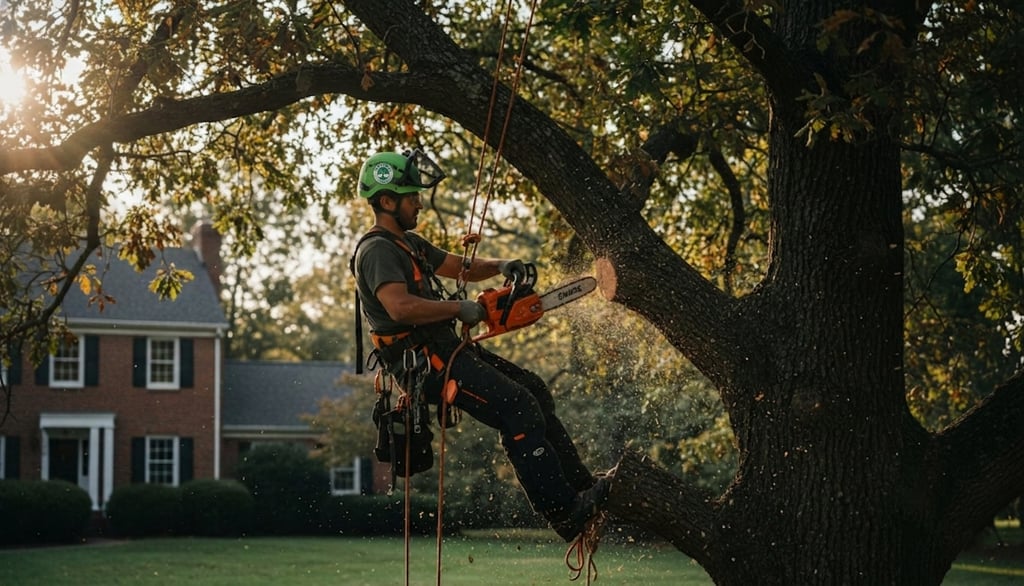
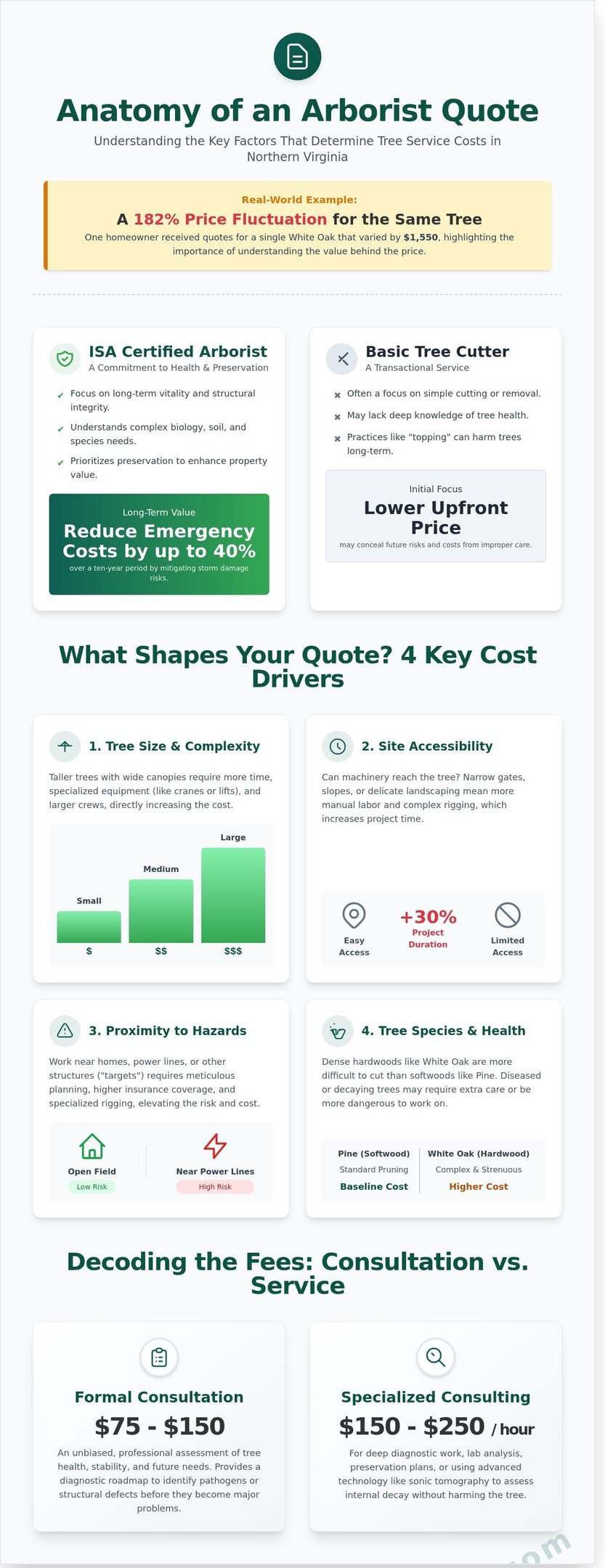
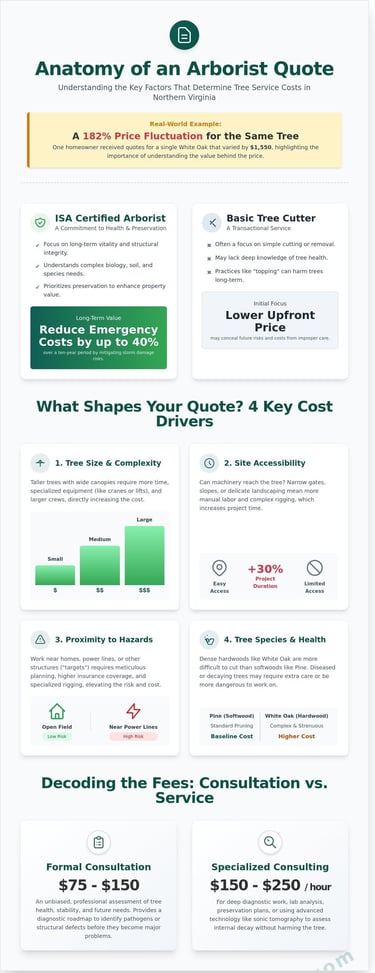
On March 12, 2024, a homeowner near West Broad Street watched a 40 year old White Oak lean toward their roof after a heavy spring saturation. They received three separate quotes for the work that varied by $1,550 for the exact same specimen. This 182% price fluctuation illustrates why understanding the true arborist cost in Northern Virginia is vital for anyone who values the long term health of their living assets.
You likely believe that a vibrant, resilient tree canopy is the soul of a Falls Church estate, yet the fear of unstable limbs or the technicalities of Fairfax County's Chapter 122 tree conservation ordinances can feel like a barrier. I'll show you the real world costs of professional tree care in 2026 so you can invest with the same precision we use to cultivate our own specimens. This guide examines local pricing benchmarks, clarifies mandatory permit requirements, and identifies the rigorous standards that define a master of the craft.
Key Takeaways
Differentiate between simple tree cutting and the long-term value of ISA-certified expertise to ensure your landscape’s horticultural preservation.
Learn how tree height, canopy spread, and site accessibility in Northern Virginia directly influence the arborist cost for your specific property.
Compare local price ranges for removals and pruning, identifying why investing in structural integrity prevents costly storm damage.
Navigate the complexities of Fairfax and Arlington County tree permits and canopy regulations to avoid unexpected compliance fees.
Discover how the "Guilmer Savoir-faire" blends traditional horticultural mastery with local precision to protect your property’s living heritage.
Table of Contents
Understanding Arborist Fees: Expertise vs. Simple Tree Cutting
Service-Specific Pricing: Removal, Trimming, and Health Care
Understanding Arborist Fees: Expertise vs. Simple Tree Cutting
Hiring a professional in the practice of arboriculture represents a commitment to the long-term vitality of your landscape rather than a mere transactional service. In Northern Virginia, the distinction between a certified expert and a general tree cutter is reflected in the arborist cost, which accounts for years of rigorous training and biological study. An International Society of Arboriculture (ISA) certification isn't just a badge; it's a guarantee that the individual understands the complex vascular systems and structural integrity of your trees. While a basic laborer might offer a low price to simply "top" or remove a tree, an expert prioritizes preservation, ensuring that your property's green canopy remains a growing asset for decades.
Northern Virginia homeowners often pay a premium for this specialized local knowledge. The soil profiles in Fairfax and Loudoun counties vary significantly, from heavy clay to rocky silt, affecting how species like the White Oak or American Beech thrive. The "Savoir-faire Guilmer" approach treats every specimen as a living legacy. By focusing on the quality of the root system and the natural growth cycle, we prevent the structural failures that lead to expensive emergency removals. Investing in health-based pruning today can reduce future emergency costs by as much as 40% over a ten-year period by mitigating storm damage risks before they manifest.
Arborist Consultation vs. Free Estimates
Many companies offer free quotes, but these are often sales pitches rather than technical assessments. A formal consultation fee, typically ranging from $75 to $150, secures an unbiased professional opinion. For a property in Falls Church, a detailed tree health report identifies specific pathogens like Oak Wilt or Emerald Ash Borer that a standard estimate might miss. This report provides a roadmap for the tree's future, documenting its current vigor and structural stability. A comprehensive tree assessment serves as a diagnostic tool that identifies structural defects and biological stressors to effectively reduce property owner liability.
Hourly Rates for Consulting in Northern Virginia
The 2026 market rates for ISA Certified Arborists in the region fluctuate between $150 and $250 per hour for specialized consulting. This arborist cost covers the expert's time spent on site, laboratory analysis of soil or tissue samples, and the creation of formal preservation plans for construction sites. Hourly billing usually triggers when a project requires deep diagnostic work or legal testimony rather than physical labor. The total bill also reflects the use of sophisticated technology. Tools like sonic tomographs, which "see" inside a trunk to detect decay, or air spades for non-invasive root collar excavations, require significant capital investment and technical mastery. These methods ensure the tree's health is never compromised by guesswork, maintaining the harmony and serenity of your outdoor space through precise, data-driven care.
The Anatomy of an Arborist Quote in Falls Church
Every tree in Northern Virginia tells a unique story of growth and environmental interaction. When you receive a quote for tree care, you aren't just paying for labor; you're investing in a technical assessment of biological risk. In Falls Church, where the tree canopy covers approximately 46 percent of the city, the arborist cost is shaped by the delicate balance between preserving this urban forest and protecting local infrastructure. Each estimate accounts for the specific "target value" of your property. A specimen tree overhanging a historic home or a primary power line requires a slower, more methodical approach. This precision ensures the structural integrity of both the tree and the surrounding assets, reflecting the high insurance premiums and specialized training required for such high-stakes work.
The physical landscape of our region creates distinct pricing tiers. In the densely packed 5,000 square foot lots of North Arlington, accessibility is often the primary cost driver. If a crew cannot fit a skid steer or a lift through a narrow side gate, they must move heavy wood by hand or use complex aerial rigging systems. This manual labor can increase the project duration by 30 percent compared to a sprawling two-acre estate in Great Falls. The species of the tree also dictates the complexity of the task. Pruning a mature White Oak (Quercus alba) involves navigating a heavy, spreading crown that demands more physical stamina and technical expertise than the relatively straightforward central leader of a Pine. Understanding the Benefits of Hiring a Certified Arborist becomes clear when you realize that an expert sees these nuances before the first cut is made, preventing costly long-term damage to the tree's health.
Size and Condition Factors
Small Trees (Under 30ft): These often involve ground-based work or basic ladder access, resulting in lower equipment overhead.
Medium Trees (30ft to 70ft): This range usually requires aerial lifts or professional climbing, significantly increasing the safety protocols.
Large Subjects (Over 70ft): These titans demand a full crew and often a full day of dedicated labor to manage the massive weight of individual limbs.
The internal health of the wood is a silent factor in your quote. Trees showing signs of fungal brackets or deep cavities represent a higher risk to the climber. In these cases, we utilize specialized tools like sonic tomography or resistance drilling to detect internal rot. These diagnostic steps add to the initial arborist cost but are essential for determining if a tree can be safely climbed or if it requires more expensive mechanical support.
Equipment and Crew Requirements
Modern arboriculture in Northern Virginia relies on a sophisticated fleet of machinery. When a tree is too unstable for a climber, we must bring in a crane. A crane rental alone can add $1,800 to $2,500 to a daily project fee, yet it's the safest method for removing large, hazardous trees near structures. There's also a notable price difference between using a bucket truck and manual climbing. While a truck is faster, it requires wide, stable ground that isn't always available on hilly Fairfax terrain. Finally, don't overlook debris management. Removing several tons of wood and brush typically accounts for 15 to 20 percent of a total quote. This includes the chipping process, hauling fees, and the meticulous site cleanup that defines a professional service. For those who value the long-term vitality of their landscape, seeking a professional health consultation is the first step in managing these variables with foresight and care.
Service-Specific Pricing: Removal, Trimming, and Health Care
Estimating a standard arborist cost in Northern Virginia requires a departure from national averages. While broad data suggests a typical tree removal price of $750, the reality in high-density areas like Falls Church or Arlington often ranges from $800 to over $5,000 for a single mature specimen. This discrepancy stems from the technical complexity of our local canopy. Large oaks and maples often stand in close proximity to historic structures, delicate utility lines, and narrow property boundaries. These factors necessitate specialized rigging equipment and increased man-hours to ensure the safety of your landscape.
Legal compliance also influences the final invoice. Before any heavy equipment arrives, homeowners must verify local ordinances. Navigating Falls Church tree removal permits is a critical first step that prevents costly fines and project delays. A professional service manages these bureaucratic hurdles as part of their comprehensive care, ensuring that every cut follows municipal safety standards.
Emergency response represents the highest tier of pricing. When a summer derecho or a heavy winter ice storm causes a structural failure, 24/7 mobilization carries a significant premium. Expect rates to increase by 50% to 100% compared to scheduled maintenance. This surge covers the immediate deployment of crews, specialized lighting for night work, and the heightened risk of working with compromised, tensioned wood in volatile weather conditions.
Professional Pruning and Trimming Costs
True horticultural pruning is an investment in the tree's biological future. Unlike basic "hacking," professional trimming focuses on structural integrity and light penetration. Standard maintenance for a medium-sized tree typically costs between $450 and $1,200. We strictly advise against "topping," a practice where the main leader is severed. This mistake triggers a flush of weak, vertical shoots that are prone to breaking. Topping actually increases your long-term arborist cost because the tree will require more frequent corrective pruning to manage the resulting hazardous growth. For the budget-conscious owner, scheduling this work during the dormant winter season can yield savings of 10% to 15% due to improved visibility and easier site access.
Stump Grinding and Debris Management
Stump removal is rarely bundled into the initial felling price. Most Northern Virginia specialists treat this as a distinct line item based on the diameter of the trunk. You can expect to pay between $3 and $6 per diameter inch, with many companies requiring a minimum mobilization fee of $150 to $250. For a deep-dive into the technical process, consult our Guide to Stump Grinding in Northern VA.
Effective debris management is the final component of a professional quote. Rather than hauling every branch to a landfill, we often recommend on-site brush chipping. This process transforms what would be waste into nutrient-rich mulch. Using this material in your garden beds preserves soil moisture and mirrors the natural nutrient cycle of a forest floor. It is a sustainable choice that reduces hauling fees while enriching your property's ecosystem.
Tree Removal: $800 - $5,000+ depending on height and obstacles.
Structural Pruning: $450 - $1,200 for established canopy trees.
Stump Grinding: $3 - $6 per inch with a $150 minimum.
Emergency Response: 1.5x to 2x standard hourly labor rates.
Navigating Local Regulations: Permits and Compliance Costs
The legalities of tree management in Northern Virginia are as intricate as a mature root system. You aren't just paying for physical labor; you're investing in a professional's ability to navigate the Chesapeake Bay Preservation Act and specific municipal codes. In Fairfax County, while you don't typically need a permit for a standard residential tree removal on private land, everything changes if your property falls within a Resource Protection Area (RPA). These zones protect water quality, and unauthorized removal here leads to mandatory replanting orders and civil penalties that far exceed the initial arborist cost.
Arlington County takes a more aggressive stance through its Tree Canopy Fund. Developers must ensure 20% canopy coverage on residential lots. When they fall short, they must contribute to a fund that has planted over 2,500 trees across the county since 2003. For a homeowner, failing to respect these boundaries isn't just an oversight; it's a significant financial liability. The cost of non-compliance is steep. In Alexandria, fines for unpermitted work on protected trees frequently reach $2,500 per violation. A seasoned expert integrates the management of these risks into the total arborist cost, ensuring you don't face a surprise summons from the county court.
Northern Virginia Permit Fees and Processes
Filing fees in Alexandria and Falls Church vary based on the project's scale. A basic permit application in Alexandria typically costs $150 for minor site plan amendments. However, the true value lies in the "certified letter of hazard." An arborist must document the tree's decay or structural instability to justify removal under local ordinances that prioritize canopy preservation. This documentation serves as your legal shield. Falls Church specifically protects "Specimen Trees," defined as any tree with a diameter of 30 inches or greater, requiring a rigorous review process before any saw touches the bark. Our local ordinances in Northern Virginia prioritize canopy preservation as a matter of public health and property value stability.
HOA Requirements and Neighbor Liability
In communities like McLean and Great Falls, Homeowners Associations (HOAs) often impose standards that exceed county law. You might face a $500 fine from your HOA for removing a native oak without prior architectural review committee approval. Boundary trees present another layer of complexity. Under Virginia legal precedents, you can prune overhanging branches back to the property line, but if your work kills the neighbor's tree, you're liable for the full replacement cost. Verifying your arborist’s $1,000,000 liability insurance policy and workers' compensation coverage is the only way to protect your assets during these high-stakes removals. A professional doesn't just cut; they provide the "Savoir-faire" required to maintain harmony between your landscape and your neighbors.
To ensure your next project respects both the law and the land, consult with the experts at Guilmer Tree Services for a comprehensive site assessment and regulatory guidance.
Why Savoir-faire Matters: Choosing Guilmer Tree Services
Expertise isn't just a technical requirement; it's a commitment to the living history of your landscape. The Savoir-faire Guilmer represents a blend of traditional horticultural heritage and modern technical precision that sets us apart in Northern Virginia. Since our founding in 2009, we've focused on the biological health of every specimen we touch. We don't view a White Oak or an American Beech as a simple obstacle to be cleared. Instead, we see a vital asset that requires a master's touch to thrive in our local clay soils. This artisan approach ensures that every cut promotes long-term vigor rather than just temporary clearance.
Transparency remains the cornerstone of our client relationships. When homeowners calculate a potential arborist cost, they often fear the "hidden fee" trap. Many regional contractors add $200 disposal fees or $85 fuel surcharges after the work is finished. We've eliminated that uncertainty. Our project-based pricing is comprehensive and fixed. Whether we're performing a delicate crown thinning or a complex removal, the quote you receive covers everything from the initial rigging to the final debris haul-away. There are no surprises; just honest work backed by a $2 million general liability policy that protects your property and your peace of mind.
Our identity as a locally owned and operated business in Falls Church means we're your neighbors. We understand the specific pests, like the Emerald Ash Borer, that have affected 15% of the local canopy over the last decade. Our team isn't a rotating door of seasonal labor. We're a dedicated crew of professionals who live and work in the same zip codes we service. This local focus allows us to respond faster to emergencies and provide advice tailored to the specific micro-climates of Northern Virginia neighborhoods.
The Guilmer Process: From Assessment to Cleanup
Precision begins the moment we step onto your lawn. We implement strict site protection protocols, utilizing specialized ground mats on 100% of our residential jobs to prevent soil compaction and turf damage. Our equipment represents the best of both worlds. We use high-performance Stihl power units for efficiency, but we rely on traditional hand-climbing techniques for delicate interior canopy work. This meticulous approach ensures we never damage the bark of your trees with heavy machinery. If you want to see how we protect your investment, you can Request a Quote for Falls Church Tree Services today. Our cleanup is so thorough that the only evidence of our visit will be the improved health and structure of your trees.
Long-term Landscape Partnership
We believe in planning for a multi-generational canopy. A single mature tree can add up to 7% to your property's market value, so we treat your landscape as a long-term investment. Our maintenance schedules aren't just about aesthetics; they're about risk mitigation. Clients who engage in our 3-year structural pruning cycles often see a 30% reduction in emergency storm damage costs. We help you move away from reactive removals and toward proactive stewardship. It's about ensuring the trees you plant today become the majestic landmarks of tomorrow. Schedule your professional tree assessment with Guilmer Tree Services today.
Protecting Your Landscape Investment in Falls Church
Investing in your property's greenery requires a balance between immediate budget needs and the long term health of your landscape. We've explored how 2026 market trends and local Falls Church regulations shape the total arborist cost, from standard pruning to complex removals requiring specific city permits. While a basic quote might seem attractive, it often misses the essential Savoir-faire that ensures your trees thrive for decades rather than just surviving the season. Quality care is a direct investment in the future of your soil and the safety of your home.
Since 2021, our team has brought horticultural excellence to Northern Virginia properties. We employ ISA Certified Arborists who understand the specific biological needs of local species. Being fully licensed and insured in Virginia, we provide a layer of security that protects both your investment and your family. Choosing quality today prevents the expensive corrective work that often follows poor pruning or neglected tree health. Your trees are living legacies that deserve precise, expert attention from professionals who value the slow growth of a healthy canopy.
Get a Professional Arborist Quote for Your Falls Church Property
Take the next step toward a vibrant, resilient canopy that will grace your property for generations to come.
Frequently Asked Questions
How much does a typical arborist consultation cost in Northern Virginia?
A typical arborist consultation in Northern Virginia costs between $75 and $200. This fee covers a 30-minute site visit to assess tree health and structural integrity. Many local firms in Loudoun County credit this amount toward the final bill if you book the recommended service. You're paying for a diagnostic eye that identifies pests or decay before they become expensive liabilities.
Is it cheaper to remove a tree in the winter in Falls Church?
Removing a tree in Falls Church during the winter months can save you 10% to 15% on the total bill. Arborists often have more availability between December and February, leading to more competitive off-season rates. Frozen ground also protects your turf from heavy equipment damage during the process. It's a strategic time to manage deciduous species while they're dormant and less prone to stress.
Does home insurance cover the cost of an arborist for fallen trees?
Homeowners insurance usually covers the arborist cost for fallen trees only if the specimen strikes a covered structure like your roof or fence. Most policies include a $500 to $1,000 limit for debris removal in these specific cases. If a tree falls in an open yard without causing property damage, insurers rarely pay for its disposal. Check your specific policy's "Additional Coverages" section for exact figures and limitations.
What is the average cost to prune a mature Oak tree in Fairfax County?
Pruning a mature Oak tree in Fairfax County typically costs between $800 and $1,500. This price reflects the complexity of climbing a 60-foot canopy and the specialized equipment needed for safe weight reduction. Proper thinning requires a deep understanding of the tree's vascular system to prevent shock. Investing in this maintenance every 3 to 5 years ensures the specimen's longevity and maintains a balanced, natural structure.
Why do arborists charge more than general landscaping companies?
Arborists charge more because they maintain specialized credentials and carry high-limit liability insurance, often exceeding $1 million. Unlike general landscapers, an International Society of Arboriculture member must have 3 years of full-time experience before they can even test. They use expensive rigging gear and aerial lifts to handle high-risk removals safely. You're hiring a technician who understands tree biology, not just a laborer with a chainsaw.
Do I need a permit to remove a dead tree in Arlington, VA?
You don't need a permit to remove a dead tree on private property in Arlington unless it's located in a Resource Protection Area. The county's Chesapeake Bay Preservation Ordinance requires a permit if the tree is within 100 feet of a stream or wetland. If the tree is alive and measures over 4.5 feet in circumference, different local canopy requirements apply. Always verify your specific lot's zoning before scheduling the work.
How can I verify if an arborist is truly ISA Certified?
You can verify an arborist's status by entering their 8-digit ID number into the "Verify a Credential" tool on the International Society of Arboriculture website. This database provides real-time confirmation of their certification expiration date and specific credentials. A legitimate professional will gladly share their certification number upon request. It's the only way to ensure your arborist cost supports a qualified expert who follows strict ANSI A300 pruning standards.
What factors cause tree removal prices to exceed $3,000?
Tree removal prices exceed $3,000 when the job requires a crane or involves trees within 10 feet of high-voltage power lines. Crane rentals alone can add $500 per hour to the project total. Extreme height, restricted access for machinery, and the presence of advanced trunk decay also increase the risk and labor hours. These complex variables demand a larger crew and specialized rigging to ensure a safe, controlled descent.
Our Services
Tree Removal
Tree Trimming and Pruning
Stump Grinding
Bush Chipping
Hours & Information
© 2026. All rights reserved.
Monday to Friday : from 9:00 AM – 5:00 PM
on-site : from 8:00 AM – 6:00 PM