🌳Arlington Tree Service: A Homeowner’s Guide to Professional Care & Removal in 2026
Need a trusted Arlington tree service? Our 2026 guide helps you find certified arborists, navigate removal permits, and protect your home from storm damage.
13 min read
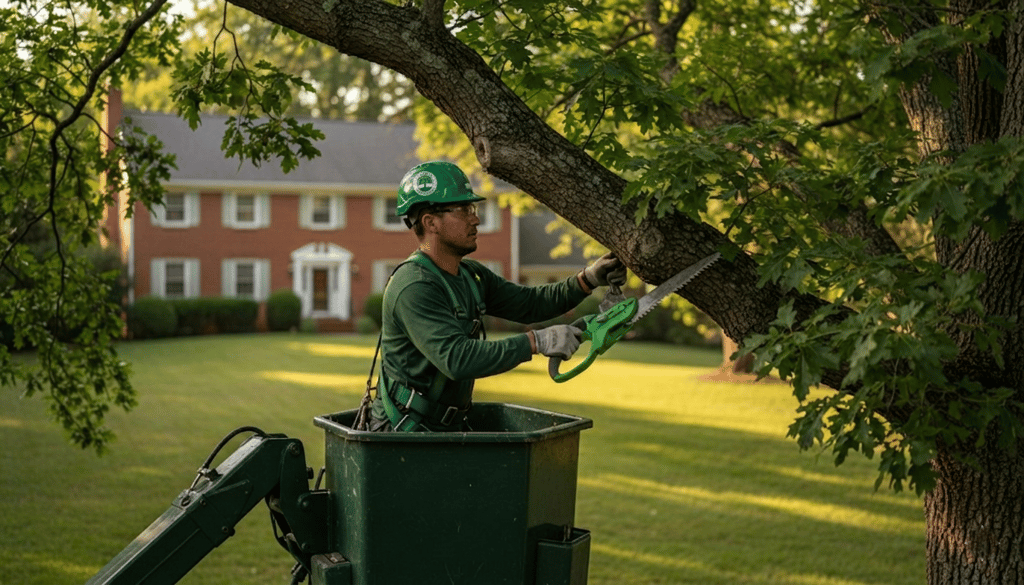
On a humid Tuesday in July 2026, a homeowner in North Arlington looks up at a 70-foot White Oak and realizes the subtle lean toward the roof wasn't there last season. It's a moment of quiet anxiety that many neighbors share. You likely view your trees as more than just landscape features; they're living legacies that provide cooling shade and essential character to our community. However, the fear of a sudden limb failure during a summer storm is a heavy burden to carry. Finding a qualified arlington tree service shouldn't feel like a gamble with your property's safety or the health of your botanical specimens.
We believe in a philosophy of stewardship where technical precision meets a deep respect for the natural world. This guide will help you secure your home while honoring the vitality of your urban canopy. You'll learn how to distinguish expert arboriculture from the work of unqualified laborers who prioritize speed over a tree's structural integrity. We'll also walk through the 2026 Arlington County permit process for removals and explain how targeted pruning can increase your property value by 15% through improved curb appeal and long-term health.
Key Takeaways
Understand how Northern Virginia’s humid subtropical climate and mature species require specialized local knowledge to maintain a thriving urban canopy.
Learn to distinguish between aesthetic trimming and structural pruning to ensure the long-term vigor and storm resilience of your trees.
Identify the scientific criteria for safe hazard removal in high-density residential areas to mitigate liability and protect your property.
Verify essential credentials, such as ISA certifications and comprehensive insurance, when selecting a professional arlington tree service.
Discover how the "Guilmer Standard" integrates traditional horticultural mastery with modern technical precision to preserve the nobility of your living landscape.
Table of Contents
Understanding Arlington’s Urban Canopy: Why Local Expertise Matters
Beyond the Cut: The Science of Pruning and Trimming for Longevity
Managing Hazards: Professional Tree Removal and Emergency Services
The Homeowner’s Checklist: Evaluating Credentials and Arlington Regulations
The Guilmer Standard: Horticultural Excellence for Northern Virginia
Understanding Arlington’s Urban Canopy: Why Local Expertise Matters
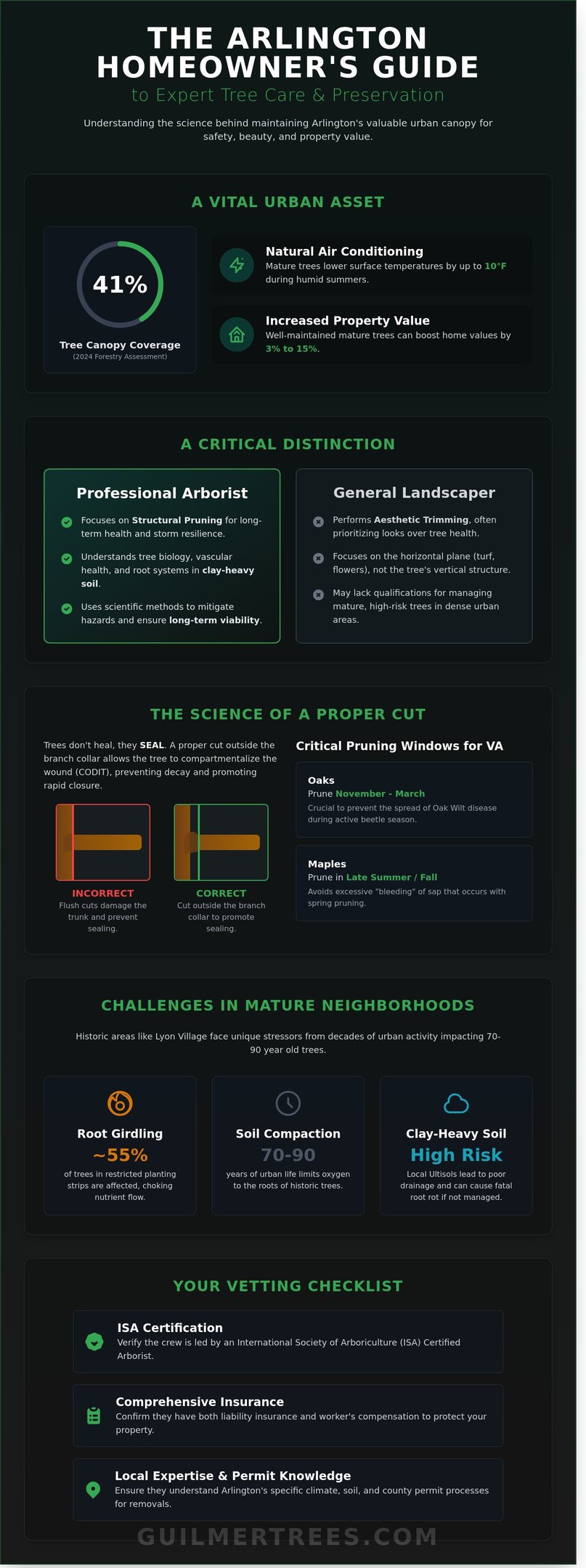
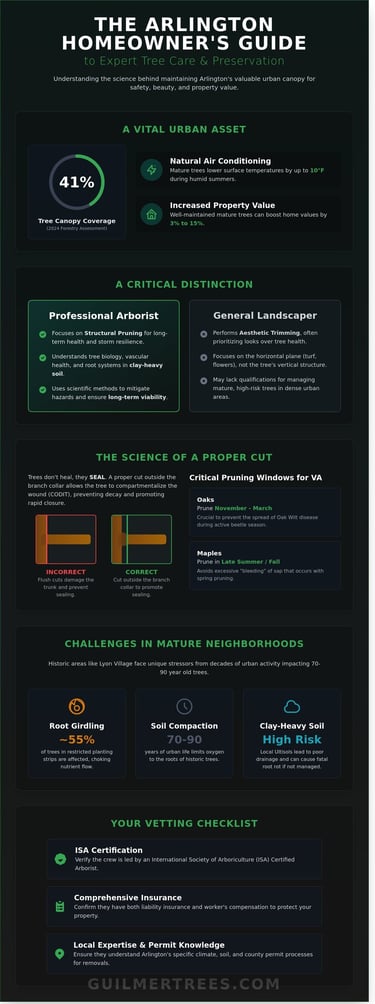
Arlington's landscape isn't just a collection of private yards; it's a sophisticated biological network. As of the most recent 2024 forestry assessments, our county maintains a 41% tree canopy coverage. This green ceiling is dominated by majestic White Oaks and Silver Maples that have stood for nearly a century. These trees do more than provide shade. They act as natural air conditioners, lowering local surface temperatures by as much as 10 degrees Fahrenheit during the peak of Northern Virginia’s humid summers. For the discerning homeowner, a arlington tree service isn't a luxury but a necessity for protecting these living assets.
Managing such a diverse canopy requires a departure from standard yard work. The science of arboriculture dictates that we treat each tree as an individual biological entity with specific needs. While general landscaping focuses on the horizontal plane of turf and flowers, professional stewardship looks upward and downward. It considers the tree's vascular health, its structural physics, and its long-term viability within a dense urban environment. This distinction is critical in our Zone 7b climate, where high humidity levels often trigger specific fungal stresses in mature hardwoods.
The Challenges of Mature Trees in Older Neighborhoods
Neighborhoods like Lyon Village and Ashton Heights feature many homes constructed between 1920 and 1950. The trees in these areas are often 70 to 90 years old, navigating incredibly tight spaces between historic structures and modern utility lines. These giants face unique stressors. Soil compaction from decades of urban activity limits oxygen reaching the roots, while root girdling affects approximately 55% of trees in restricted planting strips. Managing the structural integrity of a 60-foot oak in a confined backyard requires precision and a deep respect for the tree's natural architecture.
Horticultural Tradition Meets Modern Tree Care
Arlington’s soil is notoriously clay-heavy, a characteristic of the local Ultisols that can lead to drainage issues and root rot if not managed correctly. We adopt a "long view" approach to tree health, focusing on the quality of the root system and the natural growth cycle rather than aggressive, aesthetic-only pruning. This method respects the tree's energy reserves and ensures a high rate of recovery after any intervention. Investing in a specialized arlington tree service pays dividends beyond mere curb appeal. Data suggests that well-maintained mature trees can increase property values by 3% to 15%, reflecting a quiet pride in the permanence and health of our local environment.
Beyond the Cut: The Science of Pruning and Trimming for Longevity
Aesthetic trimming is a surface-level pursuit, often prioritizing immediate visual symmetry over long-term vitality. In the specialized world of arboriculture, we distinguish this from structural horticultural pruning, which is a calculated intervention in the tree's living architecture. Choosing a qualified arlington tree service means investing in the tree's biological future rather than just its current silhouette. Proper pruning acts as a preventative measure against the volatile storm patterns seen in Northern Virginia, where a single summer microburst can topple a poorly maintained canopy. By reducing the wind sail effect, professional pruning reduces homeowner liability and safeguards the property's structural integrity.
The biology of a tree dictates that it never truly heals in the way human tissue does. Instead, trees seal. When a limb is removed, the plant initiates a process called Compartmentalization of Decay in Trees (CODIT). This involves forming chemical and physical boundaries to "wall off" the wound. Expert arlington tree service providers prioritize these physiological responses, ensuring cuts are made just outside the branch collar to facilitate rapid sealing. For detailed standards on these techniques, the Virginia Department of Forestry tree care guide provides essential benchmarks for maintaining healthy urban canopies. Timing is equally critical for Northern Virginia species; for instance, pruning Oaks between November and March is a non-negotiable rule to prevent the spread of Oak Wilt, while Maples are best handled in late summer to minimize sap "bleeding."
Structural Pruning for Young and Mature Trees
In developing trees, the primary goal is establishing a strong central leader. This single vertical trunk prevents the formation of codominant stems, which are prone to splitting under ice loads. For mature specimens, thinning the canopy is vital. A 2024 analysis of urban forest resilience suggests that thinning a dense crown can reduce wind resistance by up to 35%, significantly lowering the risk of catastrophic failure during storms. Removing deadwood is not merely about appearance; it eliminates the primary entry points for wood-boring pests and fungal rot that can compromise the entire organism.
The Art of Crown Cleaning and Reduction
Maintaining a natural silhouette while managing urban constraints requires a delicate touch. Crown reduction shortens branches to lateral growth points, preserving the tree's form while ensuring necessary power line clearance. This technique also improves sunlight penetration, allowing understory plants and turf to thrive in what was once deep shade. In the professional community, "topping" is considered a horticultural crime. This practice involves cutting back large branches to stubs, which triggers the growth of weak, upright "water sprouts" and leaves the tree vulnerable to decay. Explore our approach to sustainable arboriculture to see how we preserve the heritage of your landscape through precision and patience.
Managing Hazards: Professional Tree Removal and Emergency Services
The decision to remove a living entity from your landscape is never taken lightly. It requires a blend of botanical knowledge and a deep understanding of the tree's structural integrity. In high-density neighborhoods, an aging silver maple or a declining oak becomes a liability when its biological vigor can no longer support its physical weight. Our arlington tree service focuses on identifying these thresholds before failure occurs, ensuring the safety of your home and the surrounding ecosystem through meticulous observation.
Hazardous Tree Assessment
Determining the health of a specimen involves more than a glance at its leaves. We look for "fruiting bodies" or fungal growth at the base, which often indicates significant internal rot. Structural leaning, especially when the soil is mounded on the opposite side, suggests a compromised root system. After storms with winds exceeding 55 mph, we frequently encounter "widow-makers," which are large, detached limbs hanging precariously in the upper canopy. According to ISA standards, a hazardous tree is a tree or tree part with a structural defect that may cause the tree or tree part to fail and cause property damage or personal injury. Identifying these risks early prevents catastrophic damage during the peak storm seasons of 2026.
Precision Removal Techniques
Removing a tree in a confined residential space is an exercise in engineering. We use specialized rigging systems to lower heavy sections of wood with millimeter precision, protecting your ornamental gardens and hardscapes. This level of care aligns with ISA pruning standards and specialized removal protocols. Once the main structure is down, stump grinding becomes the final step in reclaiming your landscape. We grind the root flare to a depth of 12 inches below the surface, allowing for immediate replanting or lawn restoration. It's a process that respects the future of your soil.
The "Guilmer" promise ensures that the aftermath is managed with the same rigor as the removal itself. We don't just leave a pile of debris; we process brush through high-capacity chippers and perform a meticulous site cleanup. This commitment to a pristine environment reflects our heritage as growers who respect the land. When a tree falls unexpectedly, our emergency arlington tree service teams prioritize stabilization and rapid response to restore order to your property. Our Savoir-faire ensures that even in the wake of a removal, the site is prepared for its next chapter of growth.
The Homeowner’s Checklist: Evaluating Credentials and Arlington Regulations
Stewardship of your land requires a discerning eye and a commitment to the long-term health of your landscape. Selecting an arlington tree service is not merely a utility transaction; it is an act of entrusting the structural integrity and biological legacy of your trees to a professional. You must start by verifying the International Society of Arboriculture (ISA) credentials. An ISA-certified arborist has documented at least 3 years of full-time experience and passed a rigorous 200-question examination covering soil management, pruning, and safety. This certification ensures that the technician understands the physiological needs of your specimens rather than just the mechanics of a chainsaw.
Insurance verification is the next non-negotiable step. You should demand a Certificate of Insurance (COI) sent directly from the provider's agent to your email. This document must confirm at least $1,000,000 in general liability and a current workers' compensation policy. Without these, you are legally vulnerable if an accident occurs on your property. Additionally, check if your land sits within a Resource Protection Area (RPA). These 100-foot buffers around perennial streams are protected under the Chesapeake Bay Preservation Act. Removing vegetation in these zones without a specific mitigation plan can lead to significant legal complications and environmental degradation.
Navigating Arlington County Permits
Arlington’s tree canopy covers approximately 41% of the county's land, and local regulations reflect a deep commitment to its preservation. You'll need a permit for any work involving "specimen trees," which are generally defined as trees with a diameter of 30 inches or greater. The County Arborist plays a pivotal role in this approval process; they evaluate the health and risk of the tree before any removal is sanctioned. Environmental regulations prioritize native species like the Quercus alba (White Oak) or Liriodendron tulipifera (Tulip Poplar), ensuring that the local ecosystem remains vigorous and resilient for the next century.
Spotting Red Flags in a Tree Service Quote
Professionalism is reflected in the details of a proposal. Avoid companies that solicit door-to-door or demand cash-only payments; these are classic markers of under-insured or transient operations. A reputable arlington tree service will provide a detailed written estimate that outlines the specific scope of work, including stump grinding and debris removal. Observe their equipment. A crew that lacks specialized climbing gear or high-tensile rigging ropes is not prepared for the density of Northern Virginia neighborhoods. Always request three references from nearby areas like Lyon Village or Country Club Hills to confirm their local track record.
Experience the excellence of professional arboriculture with our expert team.
The Guilmer Standard: Horticultural Excellence for Northern Virginia
Arlington's urban forest requires more than basic maintenance; it demands a philosophy of care that honors the lifecycle of every specimen. Since 2021, Guilmer Tree Services has operated with a commitment to the longevity of Northern Virginia’s canopy. We view the tree as a living monument. Our team blends the technical rigor of modern arboriculture with a traditional passion for botany, ensuring that every intervention, from minor pruning to complex removals, supports the health of the entire ecosystem. When homeowners seek a reliable arlington tree service, they're looking for an expert who understands the delicate balance between property safety and environmental stewardship.
Our expertise extends to the most challenging environments. Whether it's managing structural maintenance for aging silver maples or executing high-risk removals in confined residential spaces, we apply a methodical approach. We don't just look at the branches; we analyze the vigor of the root system and the integrity of the trunk. This holistic perspective allows us to maintain a footprint that spans across Arlington, Falls Church, and Alexandria, providing consistent, high-quality care to a diverse range of landscapes.
Why Arlington Trusts Guilmer Tree Services
Trust is built through consistent performance and a deep-seated respect for the land. Since our founding in 2021, we've refined a methodology we call the "Savoir-faire" difference. This approach prioritizes safety and surgical precision in every task. We don't believe in waste. Currently, 100% of the wood debris we generate is repurposed into organic mulch or biofuel, ensuring that the lifecycle of the tree contributes back to the Virginia soil. Our reputation as a premier arlington tree service rests on this commitment to sustainable excellence and rigorous professional standards that protect both your home and the local environment.
Start Your Landscape Consultation Today
Clarity in pricing is as vital as precision in pruning. We utilize project-based fees to eliminate the ambiguity often found in hourly billing, providing homeowners with a fixed value for their investment. The process is straightforward and transparent:
Initial site evaluation to identify physiological stressors and structural risks.
Development of a tailored management plan based on your property's specific needs.
Delivery of a comprehensive, free estimate with no hidden service fees.
This data-driven approach ensures you receive a plan tailored to your specific landscape goals. You can schedule your expert tree assessment with Guilmer Tree Services today to secure the future of your property’s green assets with a partner who values quality as much as you do.
Protect Your Canopy for the Decades Ahead
Your landscape represents a multi-generational investment that requires more than just a seasonal trim. By adhering to the 2026 Arlington tree canopy requirements and implementing scientific pruning, you're ensuring your property remains both safe and vibrant. Every cut we make follows the Guilmer Standard, prioritizing the long-term health of the root system and the structural integrity of the specimen. Whether you're navigating the complexities of local removal permits or seeking preventative care, choosing a specialized arlington tree service ensures your outdoor space thrives for the next 30 years or more.
Our team provides ISA Certified Arborist oversight on every project to guarantee horticultural excellence across Northern Virginia. We remain fully licensed and insured in Virginia, delivering dedicated care to homeowners throughout Arlington, Falls Church, and Alexandria. We've built our reputation on the vigor of the trees we touch and the safety of the homes we protect. Don't leave the health of your urban forest to chance when expert care is ready to serve you.
Request Your Free Expert Tree Service Quote in Arlington
We look forward to helping your landscape reach its full, magnificent potential.
Frequently Asked Questions
Do I need a permit to remove a tree on my property in Arlington, VA?
You don't need a permit to remove a tree on private property in Arlington unless it's designated as a Specimen Tree or located within a Resource Protection Area (RPA). Approximately 15% of Arlington residential lots fall under RPA restrictions where strict conservation rules apply. For standard removals, homeowners proceed without county approval, though our arlington tree service team always verifies your specific plot map before starting work. This ensures we respect local conservation ordinances while managing your landscape's health.
How much does tree removal typically cost in Northern Virginia?
Tree removal in Northern Virginia typically costs between $650 and $4,200 depending on the specimen's height and proximity to structures. A 40 foot oak near a power line requires more specialized rigging than a small ornamental in an open field. We provide detailed estimates based on 2026 labor rates and equipment fuel costs. Factors like crane access or manual climbing impact the final price, which includes the labor of our three person ground crews and specialized machinery.
What is the best time of year to trim my trees in Arlington?
The best time of year to trim your trees is between late November and early March while the plants remain dormant. Pruning during this window reduces the risk of pest infestation by 40% and allows the tree to seal its wounds more effectively before the spring growth surge. Our arborists prefer winter work because the absence of leaves provides a clear view of the branch structure. This visibility ensures we make precise cuts that promote long term vigor and structural integrity.
How can I tell if a tree on my property is hazardous?
You can identify a hazardous tree by looking for deep trunk cracks, fungal growth at the base, or more than 25% deadwood in the canopy. A tree leaning more than 15 degrees from its original vertical position often indicates root failure or soil instability. We use sonic tomography to assess internal decay that isn't visible to the naked eye. If you spot V shaped branch unions instead of strong U shapes, your tree might be prone to splitting during high winds.
Does your tree service include stump grinding and debris removal?
Our comprehensive arlington tree service includes full debris removal and stump grinding to a depth of 12 inches below the soil line. We don't leave piles of wood chips unless you specifically request them for mulch. Our team hauls away 100% of the organic waste to local recycling centers where it's processed into high quality compost. This approach leaves your property clean and ready for immediate replanting or landscaping projects without the burden of leftover waste.
What should I do if a tree falls on my house during a storm?
Stay at least 30 feet away from the tree and call an emergency tree specialist immediately if a trunk falls on your house. Contact your insurance provider to open a claim, as most policies cover removal costs when a structure is damaged. We prioritize these calls, often arriving within 120 minutes to stabilize the site and prevent further structural compromise. Don't attempt to move branches yourself, especially if they're tangled with utility lines or under tension.
Are you licensed and insured to work in Arlington County?
We hold a valid Virginia Class A contractor license and maintain a $2,000,000 general liability policy specifically for tree operations in Arlington County. Our crew includes ISA Certified Arborists who follow ANSI A300 standards for all pruning and removal tasks. Working with an insured provider protects you from liability if an accident occurs on your property. We'll provide digital copies of our certificates and Workers' Compensation coverage before any equipment arrives at your residence.
How do I know if my tree is a 'Specimen Tree' according to local laws?
Arlington County defines a Specimen Tree as any healthy tree with a trunk diameter of 30 inches or greater measured at 4.5 feet above the ground. Local ordinances protect these giants due to their significant ecological value and contribution to the urban canopy. If your tree meets this size threshold, it may require a special variance for removal under the Chesapeake Bay Preservation Act. Our experts measure your trees during consultations to ensure we comply with all 2026 preservation guidelines.
Our Services
Tree Removal
Tree Trimming and Pruning
Stump Grinding
Bush Chipping
Hours & Information
© 2026. All rights reserved.
Monday to Friday : from 9:00 AM – 5:00 PM
on-site : from 8:00 AM – 6:00 PM