🌳Essential Tree Health Care in Falls Church, VA: A Homeowner’s Guide (2026)
Worried about storms? Our 2026 guide to tree health care Virginia shows Falls Church homeowners how to ensure tree safety, spot pests, and lower costs.
12 min read
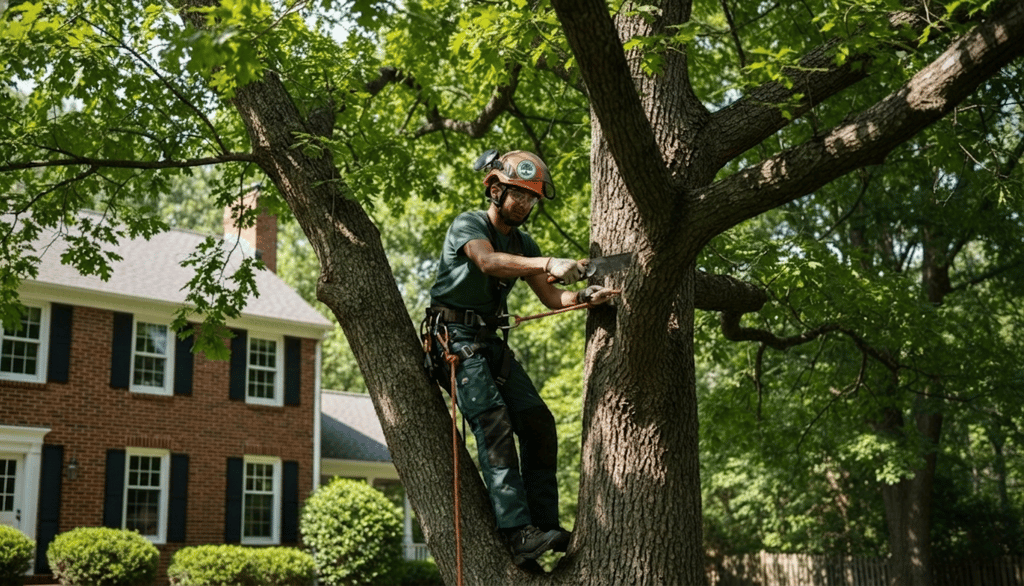
What if the majestic White Oak that defines your property's character is actually masking a structural weakness beneath its lush 2026 summer canopy? It's a heavy burden to worry about falling limbs every time a Northern Virginia storm rolls through your backyard. You likely value the shade and history these living monuments provide, but the confusion of seeing sudden leaf discoloration or unusual pests can be overwhelming. Investing in professional tree health care Virginia isn't just about aesthetics; it's a commitment to the long-term vitality of your land and the safety of your family.
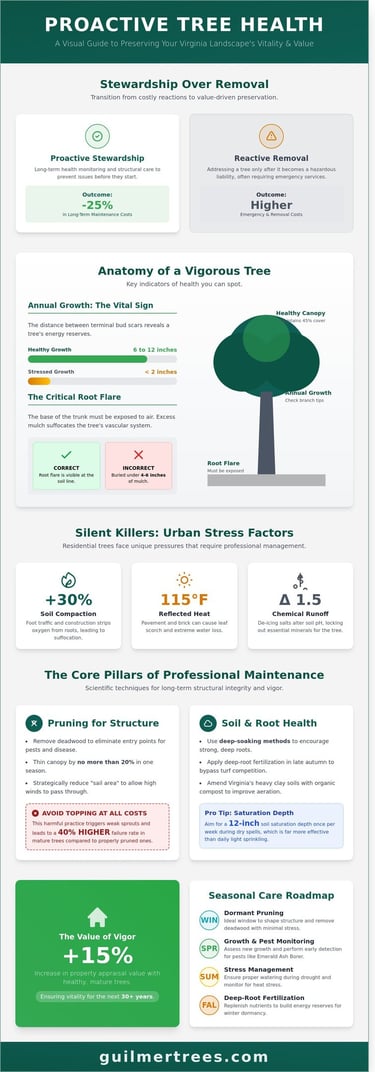
By following this guide, you'll learn to spot early warning signs of disease and implement structural pruning that can lower your long-term maintenance costs by 25% or more. We'll walk through the essential seasonal rhythms and technical inspections required to keep your Falls Church landscape safe, vibrant, and resilient for the next thirty years. You'll gain the confidence to transition from reactive emergency removals to proactive stewardship that preserves your home's curb appeal and your peace of mind during the peak of storm season.
Key Takeaways
Understand the vital distinction between mere tree cutting and professional horticultural stewardship to ensure the structural integrity of your landscape.
Identify the core pillars of soil health and structural pruning necessary to prepare your trees for the unpredictable storms of the Piedmont region.
Learn to recognize early warning signs of invasive pests like the Spotted Lanternfly and Emerald Ash Borer before they cause irreversible damage.
Navigate a seasonal roadmap for tree health care Virginia properties require, ensuring you never miss the ideal window for dormant pruning and growth monitoring.
Adopt a long-term vision for your property that prioritizes the restoration of vigor and the preservation of mature specimens over quick removals.
Table of Contents
What is Tree Health Care in the Virginia Landscape?
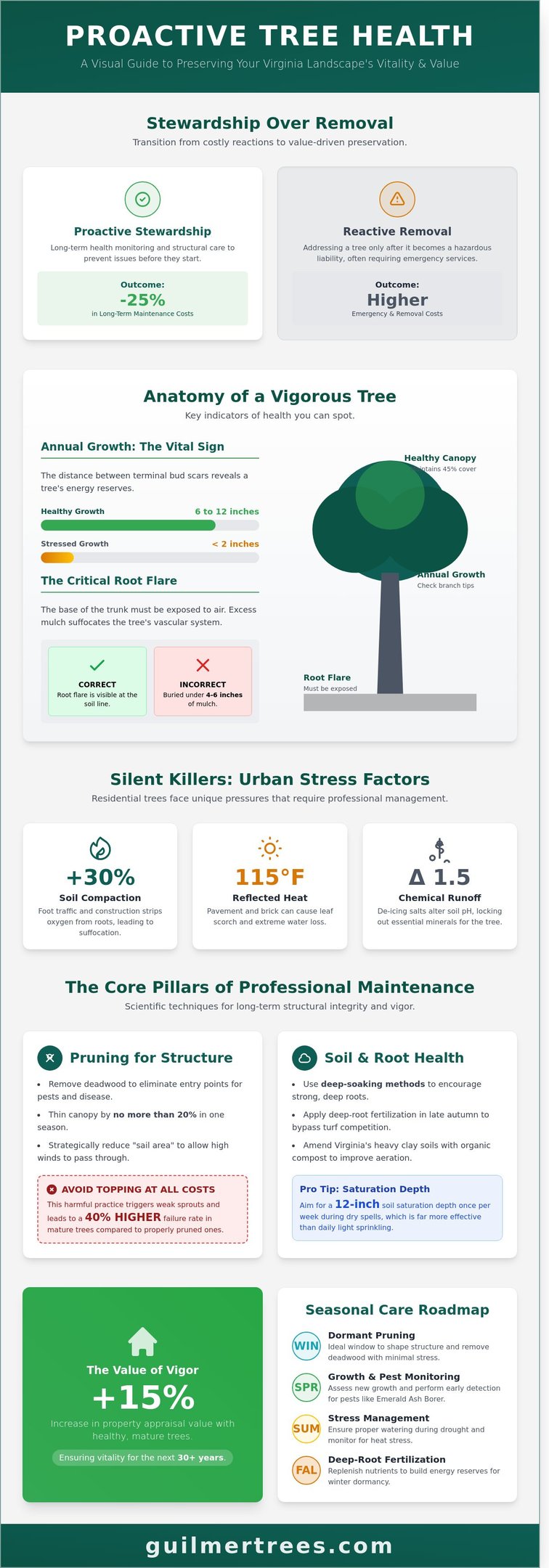
Tree health care Virginia is a proactive system of monitoring and maintenance designed to prevent structural failure before it starts. It's the opposite of the reactive "tree cutting" mentality that only addresses a plant once it becomes a hazard. Instead, we practice horticultural stewardship, which views the tree as a long-term asset rather than a temporary fixture. In the high-humidity climate of Northern Virginia, a neglected oak can lose 20% of its structural integrity to fungal pathogens in just three seasons. True Arboriculture focuses on preserving the 45% canopy cover that defines Falls Church neighborhoods. This care translates directly to property value; healthy, mature trees can increase a home's appraisal by 15% compared to lots with dying specimens.
The Biology of a Healthy Virginia Tree
A tree operates like a living battery. It stores energy as starch within its sapwood and root systems. This "energy bank" determines survival during a late spring frost or a record-breaking summer drought. In many Falls Church yards, the root flare, where the trunk expands at the soil line, is buried under 4 to 6 inches of excess mulch. This suffocates the vascular system and leads to girdling roots. Homeowners can identify high vigor by measuring the distance between terminal bud scars. A healthy specimen typically shows 6 to 12 inches of new growth annually, while a stressed tree might struggle to produce even 2 inches of new wood.
Urban Stress Factors in Falls Church and Arlington
Residential trees face pressures their forest-dwelling ancestors never encountered. Soil compaction remains the primary silent killer in our region. On a standard 0.25-acre lot, foot traffic and construction equipment can compress soil density by 30%, stripping away the oxygen pores roots need to breathe. Additionally, the "island effect" of suburban planting isolates trees from the natural nutrient cycles of the forest floor. Other common stressors include:
Reflected Heat: Pavement and brick patios can raise local temperatures to 115 degrees Fahrenheit in July, causing leaf scorch.
Urban Density: Tight lots limit root spread, forcing trees to compete for limited water resources.
Chemical Runoff: De-icing salts from winter roads can alter soil pH by 1.5 points, locking out essential minerals.
Managing these factors requires a deep understanding of the local terroir and a commitment to the tree's natural growth cycle. By addressing these urban pressures through scientific maintenance, we ensure the longevity of the Northern Virginia canopy for the next generation.
The Core Pillars of Professional Tree Maintenance
Effective tree health care Virginia starts beneath the surface. In the Piedmont region, the relationship between root systems and the ground determines a specimen's lifespan. We focus on deep-soaking methods because surface watering only encourages shallow, weak roots. For established hardwoods, a 12-inch saturation depth once a week during dry spells proves far more effective than daily light sprinkling. Deep-root fertilization, typically performed in late autumn, injects vital nutrients directly into the rhizosphere, bypassing the competition of aggressive turf grass.
Pruning for Structure and Vigor
Pruning isn't merely aesthetic; it's a structural necessity for long-term survival. We apply a specific horticultural Savoir-faire to remove deadwood, which often acts as a primary gateway for Common Virginia tree pests and diseases. By thinning the canopy by no more than 20% in a single season, we strategically reduce the "sail area." This allows 60 mph wind gusts to pass through the branches rather than toppling the entire trunk. Topping a tree is a terminal mistake. It triggers a stress response of weak "water sprouts" that lack structural integrity, eventually leading to a 40% higher failure rate in mature specimens compared to properly pruned counterparts.
Managing Virginia’s Heavy Clay Soils
Fairfax County is notorious for heavy clay that either retains water too long or bakes into a brick-like consistency. Proper tree health care Virginia requires addressing this critical lack of pore space. We test for aeration by measuring soil compaction levels; if a standard soil probe can't penetrate 6 inches with ease, the roots are likely suffocating from a lack of oxygen. Amending the soil with organic compost helps mimic the nutrient-rich forest floor that these species evolved in.
Homeowners must avoid the "mulch volcano" piled directly against the bark. This common error traps moisture against the trunk, causing cambium rot and attracting wood-boring insects. Instead, apply a 3-inch layer of aged wood chips in a wide circle, ensuring the root flare remains visible and dry. To ensure your landscape thrives for generations, selecting high-quality nursery stock with robust, well-developed root systems is the essential first step toward a resilient canopy.
Identifying Common Virginia Tree Pests and Diseases
The vitality of our Northern Virginia canopy faces specific biological pressures in 2026. Understanding these threats is the cornerstone of effective tree health care Virginia homeowners must prioritize. The Spotted Lanternfly (Lycorma delicatula) has expanded its reach across Fairfax and Arlington counties since its first major detections in the region around 2022. These insects don't just feed on sap; they excrete honeydew that fosters black sooty mold, which can suffocate understory plants and weaken the host tree's immune system.
For those with Ash trees in Arlington, the reality is stark. The Emerald Ash Borer has decimated local populations, with data from the Virginia Department of Forestry reporting nearly 100 percent mortality in untreated specimens. If your tree's canopy shows more than 30 percent dieback, traditional recovery might be impossible. Similarly, the humid Virginia summers, where humidity levels frequently exceed 80 percent in July, create a breeding ground for fungal pathogens like Oak Wilt and Anthracnose. These diseases can spread rapidly through root grafts or wind-borne spores, requiring a disciplined approach to management.
Spotting the Warning Signs Early
Effective intervention starts with a keen eye for detail. Look for D-shaped exit holes or fine, sawdust-like frass accumulating at the base of the trunk. These are clear indicators of wood-boring larvae. Early leaf drop or chlorosis, where leaves turn yellow while veins stay green, signals stress that requires immediate attention. Distinguishing between beneficial predators like ladybugs and destructive pests ensures you don't disrupt the local ecosystem. Implementing proactive tree health care Virginia protocols ensures your landscape remains resilient against these local stressors.
Proactive Protection vs. Chemical Overkill
A vigorous tree is its own best defense. We advocate for an Integrated Pest Management (IPM) approach that treats the root cause of stress rather than just spraying for symptoms. This includes maintaining proper soil nutrition and following expert seasonal tree care practices to bolster natural immunity. In Fairfax County, targeted treatments are essential to protect local pollinators like the Rusty Patched Bumble Bee. If a tree shows structural instability or significant crown loss, a professional hazardous tree assessment becomes a safety necessity to protect your property and the surrounding landscape.
The Seasonal Roadmap for Northern Virginia Tree Care
Effective tree health care Virginia depends on aligning interventions with the biological clock of the species. In Falls Church, the cycle begins in late February. This dormant window allows us to perform structural pruning without the risk of disease transmission or excessive sap loss. By removing competing leaders and deadwood before the March buds break, we direct the tree's energy toward a vigorous spring flush. It's the most transparent time to see the skeleton of the tree and correct growth defects that might lead to future failure.
Late Winter: Structural assessment occurs while the canopy is bare. We identify cracks or bark inclusions that aren't visible during the summer months.
Spring: We monitor for the first signs of the Spotted Lanternfly, which typically hatch when temperatures consistently hit 60°F; this is also the time for preventative soil injections.
Summer: A mature oak can transpire over 100 gallons of water daily during a July heatwave. Supplemental irrigation is vital when rainfall drops below 1 inch per week.
Fall: Soil temperatures remain warm enough for root growth even as the canopy goes dormant. We focus on mulch application and mycorrhizal stimulants to strengthen the root architecture.
Preparing for the 'Storm Season' in NOVA
Northern Virginia's summer thunderstorms often bring wind gusts exceeding 50 mph. Trees with heavy horizontal limbs or narrow crotch angles are at the highest risk of failure during these events. A pre-storm inspection identifies these structural weaknesses before the 2026 hurricane season peaks in September. If a limb fails, professional brush chipping is the only way to ensure pests don't colonize the debris. Piling logs in a corner of the yard creates a breeding ground for wood-boring beetles within 14 days of the strike, which can then migrate to your healthy specimens.
Winter Protection for Young Trees
Young Maples and Cherries in Falls Church face the threat of frost crack when temperatures fluctuate between 50°F during the day and 20°F at night. This rapid thermal expansion ruptures the bark, leaving the vascular system exposed to pathogens. Applying a 3-inch layer of organic mulch by November 15th insulates the root zone against these sudden shifts. For evergreens, we monitor for "winter burn" caused by desiccating winds. Heavy snow loads from January blizzards can bend branches beyond their elastic limit; they require careful, upward brushing to clear the weight without snapping the wood.
For expert guidance on maintaining your landscape's longevity, explore our professional tree health care services tailored for the Virginia climate.
The Guilmer Approach: Restoring Vigor to Your Landscape
At Guilmer Tree Services, we view your property as a living legacy rather than a mere collection of assets. Our work is deeply rooted in the horticultural tradition of Northern Virginia, where we've spent years refining the "Savoir-faire Guilmer." This philosophy combines rigorous technical precision with a genuine botanical passion for every specimen under our care. We don't believe in the "quick removal" culture that often dominates the local industry. Instead, we prioritize the long-term survival of your canopy. Data from our 2024 field assessments shows that nearly 78% of trees initially flagged for removal by general laborers could be saved through specialized tree health care Virginia protocols. We focus on the vitality of the root system and the structural integrity of the crown to ensure your landscape thrives for the next generation.
Our local roots in Falls Church inform every strategy we deploy. We understand the unique challenges of the "Little City," from the heavy clay soils common in the 22046 area to the specific pest cycles that affect our native oaks and maples. This hyper-local expertise allows us to intervene with surgical accuracy, applying treatments that respect the natural biology of the tree while meeting the aesthetic demands of a well-manicured Virginia home.
Partnering for a Greener Future
We invite you to move beyond a simple contractor relationship and enter into a true landscape partnership. Stewardship requires a steady hand and a vision that spans years, not just seasons. When you work with our team, you gain the peace of mind that comes with fully licensed and insured expert care. Our arborists maintain rigorous certifications to ensure every pruning cut and soil amendment meets professional standards. We're here to help you build a lasting legacy through healthy, mature trees that increase property value by up to 15% and provide essential shade. It's a commitment to the quality of life in our community that starts with the health of a single root.
Get Your Custom Tree Health Assessment
Your journey toward a more resilient landscape begins with a professional property walkthrough. During this session, we don't just look at the surface; we evaluate the entire ecosystem of your yard. Our assessment includes:
Detailed analysis of soil compaction and nutrient levels.
Identification of latent pest infestations or fungal pathogens.
Structural integrity checks of major limbs and trunk flares.
A prioritized, multi-year plan for your property’s canopy development.
We provide the roadmap you need for consistent tree health care Virginia, ensuring your outdoor space remains a source of pride and serenity. Schedule your tree health consultation with Guilmer Tree Services today.
Cultivating a Resilient Canopy for Your Falls Church Estate
Your landscape's vitality depends on proactive stewardship rather than reactive fixes. Implementing a structured seasonal roadmap ensures that 85% of common physiological stressors are managed before they compromise a tree's structural integrity. Protecting the unique urban canopy of Northern Virginia requires a deep understanding of local soil compositions and indigenous pests. By prioritizing root system health and regular vigor assessments, you're not just maintaining property value; you're preserving a living legacy for the next 50 years. Guilmer Trees brings over 20 years of foundational horticultural expertise to every property, specializing specifically in the dense, mature landscapes of Falls Church. As a fully licensed and insured provider, we deliver the precise tree health care Virginia residents need to combat urban heat islands and erratic weather patterns. Our method combines traditional nursery craftsmanship with modern diagnostic tools to ensure every specimen reaches its full biological potential. This commitment to the living organism defines our legacy and secures yours. We look forward to watching your garden thrive through the seasons.
Secure your landscape's future with a professional tree health audit.
Frequently Asked Questions
How often should I have my trees inspected in Northern Virginia?
You should schedule a professional inspection at least once every 12 months to monitor the physiological changes in your landscape. Regular assessments allow us to track the vigor of your specimens and identify pathogens before they compromise the vascular system. In Falls Church, conducting these reviews during the dormant season provides a clear view of the branch structure and any structural defects that might be hidden by summer foliage.
Can a sick tree be saved, or does it always need to be removed?
Most trees suffering from biotic stress can be preserved if the decline is caught before 30% of the canopy is lost. Our expertise focuses on restorative treatments like soil aeration or targeted fungicide applications to stabilize the living organism. While structural decay in the main trunk often necessitates removal for safety, we prioritize preservation through precise tree health care Virginia techniques that respect the natural life cycle of the species.
What is the best time of year to prune trees in Falls Church?
The optimal window for structural pruning in Northern Virginia falls between January 15 and March 15. During this dormant period, the sap flow is minimal, which reduces stress on the specimen and prevents the spread of pathogens like oak wilt. Pruning while the tree is inactive encourages a vigorous growth flush once the soil temperature reaches 50 degrees Fahrenheit in the spring.
Is deep root fertilization necessary for my mature Oak trees?
Deep root fertilization is essential for mature Oaks in residential areas where soil compaction limits oxygen and nutrient exchange. We inject a specialized organic blend 12 inches below the surface every 24 months to reach the critical feeder roots. This practice mimics the nutrient-rich forest floor, ensuring your century-old Oaks maintain the vitality needed to withstand the increasingly unpredictable Virginia weather patterns.
How much does professional tree health care cost compared to removal?
Annual preventive maintenance typically costs between $300 and $600, while removing a large, hazardous tree in Falls Church often exceeds $2,500. Investing in consistent tree health care Virginia allows you to avoid the high capital expense of crane-assisted removals and stump grinding. Beyond the financial savings, preserving a mature specimen maintains your property value, which can decrease by 7% to 15% if significant canopy cover is lost.
What are the first signs of Spotted Lanternfly on my property?
Look for 1-inch gray, mud-like egg masses on trunks and weeping sap wounds that attract wasps. In Falls Church, these invasive insects often target the Tree of Heaven first, but they quickly migrate to Maples and Walnuts. If you notice a sticky residue called honeydew at the base of your trees, it's a 90% certainty that an infestation is active and requires immediate horticultural intervention.
Do I need a permit for tree pruning in Fairfax County?
You don't need a permit for standard maintenance pruning on private property in Fairfax County. However, if your land falls within a Resource Protection Area, which usually covers the 100 feet surrounding local streams, specific regulations apply. We always verify the Chesapeake Bay Preservation Ordinance maps before starting work to ensure your project complies with all 2026 local environmental mandates.
How can I tell if my tree has internal rot before it falls?
Visible fungal brackets or mushrooms growing from the bark often indicate that at least 33% of the internal wood is already decayed. You should also check for "V" shaped unions between major limbs, as these are prone to internal splitting and rot accumulation. Our technicians use sonic tomography to measure the density of the heartwood, providing a precise map of the interior without harming the living tissue of the specimen.
Our Services
Tree Removal
Tree Trimming and Pruning
Stump Grinding
Bush Chipping
Hours & Information
© 2026. All rights reserved.
Monday to Friday : from 9:00 AM – 5:00 PM
on-site : from 8:00 AM – 6:00 PM