🌳Expert Tree Trimming in Northern Virginia: Structural Care for Falls Church Properties
Protect your home from storm damage with expert tree trimming in Northern Virginia. Our structural care boosts property value and ensures your family's safety.
14 min read
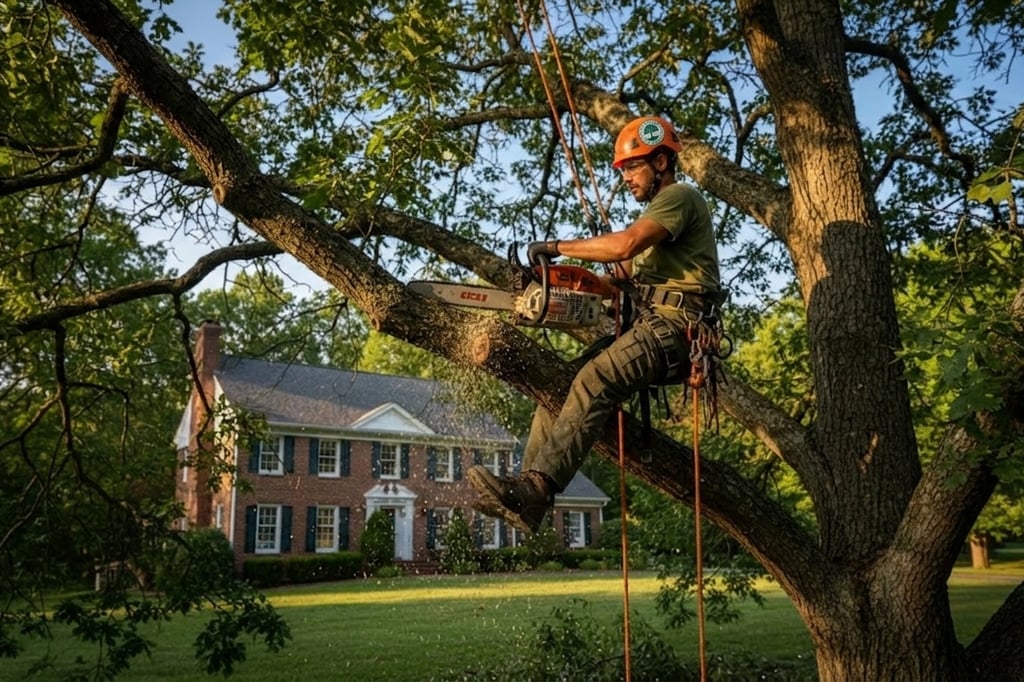
During the severe thunderstorms of July 2023, many Falls Church families spent sleepless nights watching heavy limbs sway precariously over their roofs. It's a valid concern, as the hasty tree trimming Northern Virginia homeowners often witness can lead to weakened structures and hazardous decay. You recognize that your trees are the soul of your landscape, but the anxiety of a falling branch shouldn't outweigh the quiet joy of a shaded garden. It's frustrating to see "tree cowboys" who prioritize speed over biology, leaving behind mangled canopies and unsightly debris.
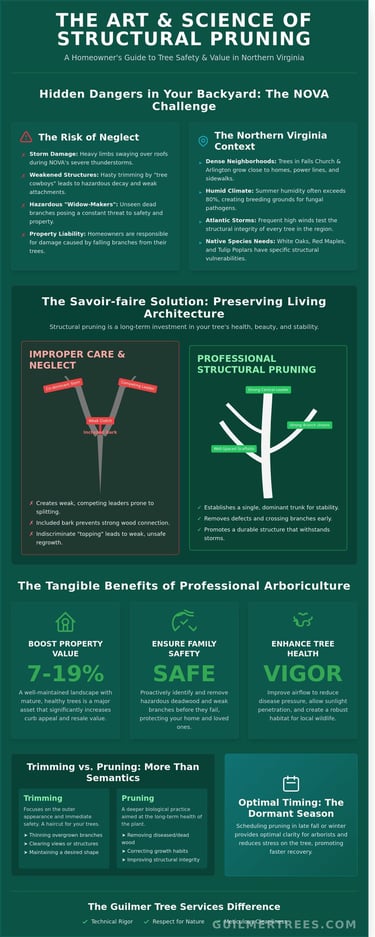
We believe that arboriculture is an act of stewardship that requires both technical rigor and a deep respect for the living specimen. By focusing on structural care, you can increase your property value by an estimated 7% to 19% while ensuring your yard remains a safe sanctuary for children and pets. This guide details the technical nuances of structural pruning, how it safeguards your home against the next NOVA storm season, and why clear communication is the hallmark of a true artisan who respects the long life of every tree.
Key Takeaways
Master the technical "Savoir-faire" of structural pruning to identify weak crotches and co-dominant stems, preserving the noble architecture of your trees for generations.
Discover why scheduling tree trimming Northern Virginia during the dormant winter season provides the optimal clarity and recovery time for your landscape's most valuable specimens.
Understand the critical safety risks of hazardous "widow-makers" and how professional intervention protects your property from liability and unpredictable storm damage.
Learn how meticulous debris management and site cleanliness during the trimming process reflect a true artisan's commitment to the long-term beauty of your outdoor sanctuary.
Table of Contents
What is Tree Trimming in Northern Virginia and Why Does It Matter?
The Art of Structural Pruning: Preserving Living Architecture
What is Tree Trimming in Northern Virginia and Why Does It Matter?
The practice of tree trimming involves the selective removal of specific sections of a plant, such as branches, buds, or roots. It's a precise horticultural intervention that balances the biological needs of the specimen with the safety requirements of a modern landscape. In the context of tree trimming Northern Virginia, this service transitions from a simple chore to a vital necessity for urban forest management. Our region's unique climate and high density demand a professional touch to ensure that every cut promotes long term vigor rather than causing structural decay.
Dense residential pockets like Falls Church and Arlington present specific challenges for arboriculture. With over 14,000 residents packed into the 2.2 square miles of Falls Church, trees often grow in close proximity to power lines, historic homes, and public sidewalks. Expert intervention prevents heavy limbs from becoming hazards during summer thunderstorms. Beyond safety, the aesthetic impact is undeniable. A 2021 study by the Arbor Day Foundation indicates that professionally maintained landscapes can increase property values by as much as 15 percent. A well-trimmed canopy creates a sense of order and care that defines the "curb appeal" of our local neighborhoods.
The Savoir-faire Guilmer approach treats every tree as a living legacy. We don't just cut; we observe the natural architecture of the species. This philosophy respects the tree's innate growth patterns while meticulously removing defects that could compromise human safety. It's a dialogue between the artisan and the plant, ensuring that the final result looks natural, healthy, and structurally sound for decades to come.
The Role of Trimming in Northern Virginia's Ecosystem
Virginia's humid summers often see relative humidity levels climb above 80 percent, creating a breeding ground for fungal pathogens like powdery mildew and anthracnose. Proper tree trimming Northern Virginia opens the canopy to allow for consistent airflow, which dries the foliage and significantly reduces disease pressure. Crown thinning is a precise method used to reduce wind resistance during the Atlantic storm seasons that frequently impact the East Coast. In Fairfax County, these maintained canopies provide essential corridors for local wildlife. Healthy, structured trees offer safer nesting sites for native birds like the Northern Cardinal, ensuring that our suburban forests remain vibrant ecosystems.
Trimming vs. Pruning: More Than Just Semantics
While people often use the terms interchangeably, they represent different objectives. Trimming focuses on the outer appearance and immediate safety of the tree, often involving the thinning of overgrown branches that obscure views or touch structures. Pruning is a deeper biological practice aimed at the health of the plant, such as removing diseased wood or correcting growth habits. Using the wrong term can lead to a service that doesn't meet your specific needs. If you're unsure which path is right for your landscape, you can learn more about the technical distinctions here: Tree Pruning vs. Trimming: What's the Difference?. Proper identification of the goal ensures the tree receives the exact care it requires to thrive in our local soil.
The Art of Structural Pruning: Preserving Living Architecture
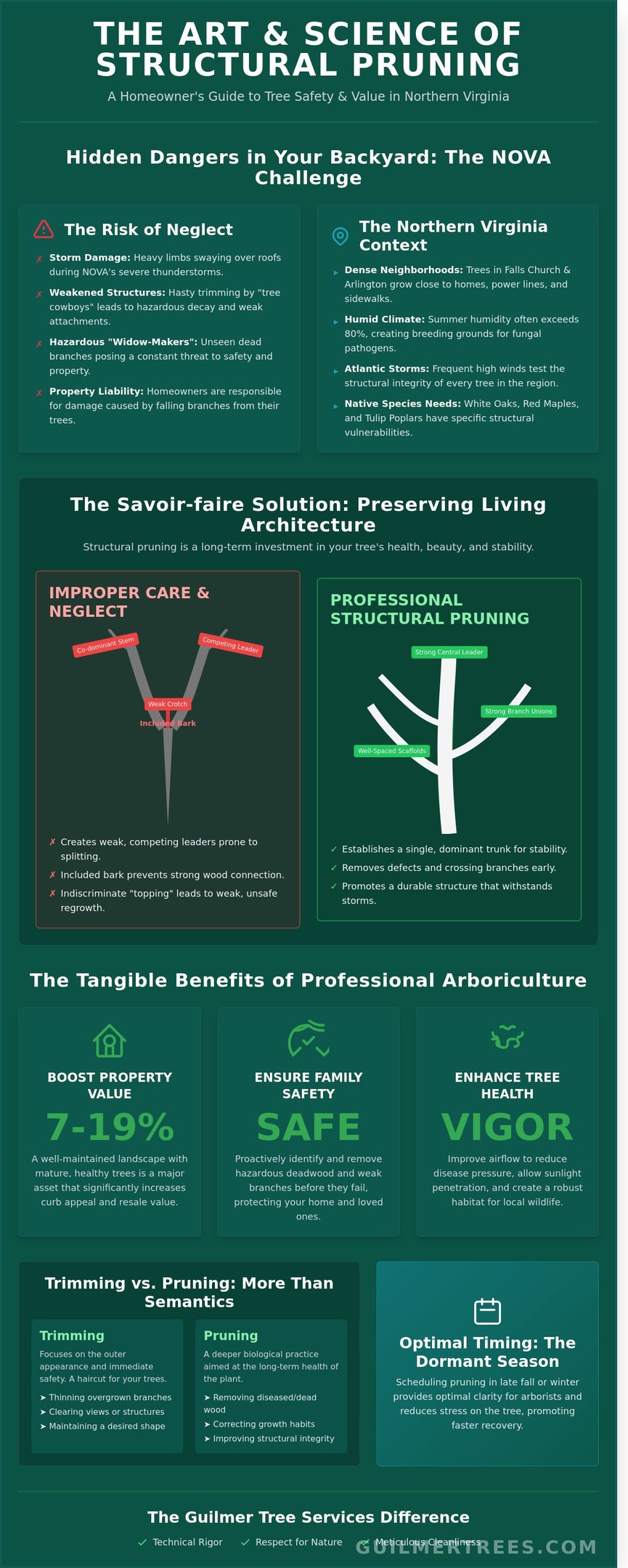
True arboriculture transcends simple maintenance; it's a commitment to the tree's future. When performing tree trimming Northern Virginia, our experts prioritize the tree's biological needs over mere convenience. Our Savoir-faire Guilmer focuses on a long-term vision, ensuring a specimen planted today thrives for a century. This requires a deep technical understanding of a tree's internal mechanics. We specifically look for co-dominant stems, where two main trunks compete for the same space. These create weak crotches that lack the connective tissue necessary for stability. By implementing structural pruning early in a tree's life, we direct its energy toward a single, strong central leader. This precision prevents the topping of trees, a cardinal sin that involves cutting the crown indiscriminately. Topping triggers a frantic, weak growth response, producing water sprouts that are prone to breaking. Our goal is a vigorous tree that maintains its natural dignity while remaining safe for its surroundings.
Identifying Structural Weaknesses in Native Species
Northern Virginia landscapes are defined by the majesty of White Oaks, Red Maples, and Tulip Poplars. These species require specific diagnostic attention. We look for included bark, a condition where bark grows inward between two branches, preventing a solid wood-to-wood connection. During the heavy ice loads of recent Virginia winters, over 60% of canopy failures were linked to these hidden structural flaws. Overextended limbs are another concern for Falls Church homeowners. These heavy, horizontal branches often stretch too far over rooflines, becoming susceptible to snapping under the weight of wet snow. Through strategic tree trimming Northern Virginia residents can mitigate these risks before they manifest as property damage. We identify these hazards early, ensuring the local canopy remains both beautiful and resilient against the unpredictable climate of the Mid-Atlantic.
The Guilmer Technique: Precision and Respect
Our crews utilize the Three-Cut Method to ensure every intervention promotes healing rather than injury. This technique involves an initial undercut to prevent the weight of the branch from tearing the bark down the trunk. We follow this with a top cut to remove the limb, and a final, precise cut just outside the branch collar. This meticulous approach encourages rapid callusing, which is the tree's natural way of sealing the wound against pathogens. While we employ specialized aerial equipment for height, our artisans prioritize hand-tools for delicate, interior work. This allows for a level of precision that heavy machinery cannot replicate. We don't just remove hazards; we sculpt. The result is a noble silhouette that respects the tree's natural form. This balance between safety and aesthetics is the hallmark of our professional standard. It's a philosophy that views every cut as a permanent part of the tree's history. You can learn more about our commitment to sustainable specimen care to see how we preserve these living monuments for the next generation.
When to Schedule Tree Trimming in Northern Virginia
The biological rhythm of a tree dictates the success of any horticultural intervention. For homeowners, understanding the physiological cycles of local species like White Oaks or Red Maples is essential. The dormant season, typically spanning from late December to early March in our region, provides the most restorative window for tree trimming Northern Virginia properties require. During these cold months, the tree's metabolic processes slow significantly. This dormancy minimizes sap loss and prevents the stress associated with active growth phases. Without leaves, the underlying skeletal structure of the specimen is fully visible, allowing an arborist to identify crossing branches or weak crotches with 100% accuracy.
Spring and summer sessions focus on management rather than structural overhaul. We primarily target "water sprouts," those thin, vertical shoots that appear after heavy rains and drain energy from the main limbs. By late June, thinning the canopy by 15% to 20% reduces the "sail effect." This practice is vital for preventing limb failure during the intense thunderstorms that frequently roll through Fairfax County. Fall remains a season of observation. While it's an excellent time for a health audit, we avoid heavy pruning. Cutting late in the year can stimulate new growth that won't harden off before the first hard frost, which historically arrives in Northern Virginia around November 15.
Seasonal Guide for Virginia Homeowners
January to March: This is the primary window for structural correction. While the tree "sleeps," we can remove large limbs without risking the spread of pests like the Emerald Ash Borer or Dutch Elm Disease, which are inactive in freezing temperatures. It's the best time to shape the future silhouette of the plant.
June to August: Focus on safety and light penetration. Thinning the interior of the canopy allows air to circulate, reducing the risk of fungal infections. This mid-year maintenance ensures your trees are prepared for the high winds of the late summer storm season in the mid-Atlantic.
October to November: Transition into cleanup mode. We focus on deadwood removal and "brush chipping" to clear debris before the first snow load hits. Removing dead or decaying wood now prevents heavy ice from snapping those brittle branches onto your roof or driveway during January blizzards.
Signs Your Tree Needs Immediate Attention
Nature doesn't always wait for the ideal season. When Assessing Tree Hazards, our team looks for specific physiological indicators that suggest a specimen's stability is compromised. If you notice limbs touching power lines or scraping against shingles in Arlington neighborhoods, the risk of fire or structural damage is too high to delay. These mechanical conflicts require precise, immediate clearance to protect your home's envelope.
Internal health issues also trigger emergency tree trimming Northern Virginia services. Look for these three red flags:
Visible Decay: The presence of shelf fungi or "cankers" on primary structural branches indicates internal rot that could lead to a total limb collapse.
Trunk Cracks: Deep, vertical fissures in the main trunk suggest the tree's core is splitting under its own weight.
Soil Heaving: If the ground at the base of the tree lifts after a heavy rain, the root system is failing. This is a critical warning that the tree could fall entirely.
We approach every cut with the respect a living organism deserves. Whether it's a routine winter thinning or an urgent summer limb removal, the goal is always to preserve the long-term vigor of the canopy while ensuring the safety of your landscape.
Assessing Tree Hazards in Falls Church and Fairfax County
Many homeowners in Falls Church look at a leaning oak or a dead branch and wonder if they can handle the task themselves. It's a tempting thought, but the reality of tree trimming Northern Virginia involves risks that go far beyond a simple weekend project. High-altitude work requires more than just a ladder; it demands an understanding of "widow-makers," those heavy, detached limbs suspended precariously in the upper canopy. These branches can fall without warning, even on windless days, posing a lethal threat to anyone beneath them. Our team approaches these hazards with the quiet rigor of the Guilmer tradition, ensuring the safety of your home and the vitality of your landscape.
Owning property in Northern Virginia carries a specific legal weight. If a known hazardous tree falls onto a neighbor's roof or a public sidewalk, the owner is often held liable for damages under local negligence laws. Proactive assessment isn't just about aesthetics; it's a defensive strategy for your estate. An expert eye identifies the "hidden signs" of decline that an untrained observer misses. This includes fungal conks at the base, which indicate advanced root rot, or narrow "V-shaped" crotches where bark is included. These inclusions signal a high probability of structural failure during the next heavy ice storm or summer microburst.
Investing in professional maintenance acts as a financial shield for your property. A targeted trimming session might cost a few hundred dollars, while an emergency removal after a limb crushes a fence or power line can easily exceed $3,500. By addressing structural weaknesses early, you're essentially buying insurance for your landscape's longevity. We treat each tree as a living legacy, focusing on the long-term health of the specimen rather than just a quick fix.
The High Cost of 'DIY' Tree Cutting
The statistics regarding amateur tree work are sobering. Data from the Consumer Product Safety Commission shows that over 30,000 people are treated in emergency rooms for chainsaw-related injuries every year. Beyond personal safety, amateur cuts often lead to "flush cuts" or "stubbing," which destroy the tree's vascular system. When the cambium layer is compromised, the tree loses its ability to seal wounds, inviting pathogens that cause slow death. Professional insurance and licensing are non-negotiable in tree trimming Northern Virginia because they protect you from the unpredictable physics of falling timber.
Navigating Local Regulations and Permits
Fairfax County maintains a rigorous "Tree Conservation" mindset, aiming for a 50% canopy cover across the region by 2030. Before you start cutting, it's vital to know Do You Need a Permit to Cut a Tree in Fairfax County? to avoid heavy fines. Certain areas, especially those designated as Resource Protection Areas, have strict limits on what can be removed. The team at Guilmer Tree Services handles these complexities for our Falls Church clients, ensuring every cut aligns with local ordinances and preserves the ecological heritage of our community. We navigate the paperwork so you can focus on the beauty of your grounds.
To protect your property and ensure the health of your canopy, schedule a professional hazard assessment with Guilmer Tree Services today.
Why Choose Guilmer Tree Services for Your NOVA Property?
At Guilmer Tree Services, we operate as artisans of the earth. We don't just prune branches; we steward the long-term vitality of the Northern Virginia canopy. Our approach remains rooted in a deep respect for the living specimen, moving beyond simple maintenance to embrace a philosophy of horticultural excellence. When you entrust us with your landscape, you're choosing a team that understands the biological clock of an oak or a maple. We recognize that a single improper cut can invite pathogens or compromise a tree's structural integrity for years to come. This is why our tree trimming Northern Virginia services focus on precision over speed, ensuring your property gains both safety and aesthetic grace.
Transparency forms the bedrock of our client relationships. We utilize project-based fees rather than hourly rates, a decision that protects the homeowner from the unpredictability of field work. This model ensures that our arborists take the necessary time to address every lead and lateral branch without the pressure of a ticking clock. Whether a task requires three hours or six, the price remains fixed. This commitment to honesty reflects our broader Savoir-faire, a blend of technical mastery and professional integrity that brings a sense of serenity to your outdoor space. We treat your garden as a sanctuary, not a job site.
Cleanliness isn't an afterthought for our crews; it's a core component of the craft. Every project includes professional brush chipping and comprehensive debris removal as a standard protocol. Research indicates that roughly 35 percent of homeowner complaints in the landscaping industry involve left-behind waste or damaged turf. We eliminate this frustration by leaving your property in a state of renewed elegance. From the first branch removed to the final sweep of the driveway, our presence is marked by a quiet, meticulous rigor that honors your investment.
Our Local Commitment to Falls Church and Beyond
As a privately owned business with 18 years of experience in the region, we serve as a partner of confidence for residents in Alexandria, McLean, and Arlington. We aren't a distant franchise; we're local specialists who understand the heavy clay soils and humid microclimates of the Potomac River valley. The Guilmer Signature is present in every project we undertake. This means every cut is made with a vision of the landscape's future, prioritizing the tree's natural architecture. We've conducted over 2,400 structural assessments across Northern Virginia, helping homeowners transition from reactive tree care to a proactive, sustainable legacy.
Next Steps: Reclaiming Your Landscape
Reclaiming the beauty of your property starts with a professional evaluation. Our structural assessments go beyond a simple visual check; we analyze the vigor of the root system and the health of the crown to provide a roadmap for growth. During a Guilmer service call, you can expect a punctual arrival, a clear briefing on the day's objectives, and a execution phase that minimizes disruption to your daily life. Our tree trimming Northern Virginia experts handle the heavy lifting while you enjoy the results. Your trees deserve a partner who values their history and their future. Schedule your Northern Virginia tree trimming assessment with Guilmer today.
Secure the Longevity of Your Northern Virginia Canopy
Investing in the structural health of your landscape is a commitment to the future of your property. Proper tree trimming Northern Virginia goes beyond simple aesthetics; it's a technical discipline that preserves the biological vigor of native species. By scheduling structural pruning during the dormant window between December and February, you minimize physiological stress and promote robust growth for the coming spring. Our approach at Guilmer Tree Services combines traditional horticultural rigor with modern safety standards. We provide project-based transparent pricing for every client in Falls Church and Fairfax County, ensuring you understand the value of the work before we begin. As a fully licensed and insured provider in Virginia, we treat every oak and maple as a vital piece of living architecture. We don't just cut branches; we manage the lifecycle of your trees to ensure they remain stable and beautiful for decades. Taking care of your trees today prevents costly hazards tomorrow. Your property deserves the steady hand of an expert who understands the unique soil and climate of the Potomac basin.
Get a Professional Tree Trimming Quote in Falls Church
We look forward to helping your landscape thrive for generations to come.
Frequently Asked Questions
How much does tree trimming cost in Northern Virginia?
Tree trimming Northern Virginia costs typically range from $450 to $1,800 per tree depending on size and complexity. A small ornamental specimen like a 15-foot Dogwood requires less labor than a 70-foot White Oak needing technical rigging. We provide transparent estimates based on the specific physiological needs of your canopy. This ensures you invest in the long-term vigor and structural integrity of your landscape's most valuable assets.
Is a permit required for tree trimming in Falls Church or Arlington?
You don't need a permit for standard maintenance on private property in Falls Church or Arlington. However, Falls Church City Code Chapter 44 requires specific approval if you're working on "Specimen Trees" or vegetation within a Resource Protection Area. Arlington County requires permits for any work on trees located in the public right-of-way. We verify these local ordinances before every project to ensure full regulatory compliance for your property.
How often should I have my trees trimmed for safety?
Most mature trees require a professional safety pruning every 3 to 5 years to maintain structural balance. Fast-growing species like Silver Maples often benefit from a 2-year cycle to manage aggressive limb growth. Regular inspections allow us to identify weak crotches or fungal pathogens before they become hazards. This proactive approach respects the natural growth cycle while protecting your home from unexpected failures during severe weather events.
What is the difference between topping a tree and crown reduction?
Topping removes the main leader and large branches, often depleting 30 percent of a tree's energy reserves and inviting decay. Crown reduction follows ANSI A300 standards, shortening limbs back to lateral branches that are at least one-third the diameter of the parent stem. This technique preserves the tree's natural architecture and vascular health. Our arborists prioritize crown reduction to maintain height control without compromising the specimen's biological future.
Can you trim trees near power lines in Fairfax County?
You shouldn't attempt to trim any vegetation within 10 feet of high-voltage power lines yourself. In Fairfax County, Dominion Energy manages clearances for primary distribution lines, typically those carrying 7,200 volts or more. For secondary lines running from a pole to your house, we employ line-clearance certified professionals to handle the work safely. Safety remains our primary concern when navigating these complex urban intersections of utility infrastructure and nature.
Do you offer brush chipping and debris removal after trimming?
Every tree trimming Northern Virginia project includes comprehensive brush chipping and site cleanup as a standard part of our service. We utilize industrial chippers capable of processing limbs up to 12 inches in diameter efficiently. You can choose to keep the nutrient-rich wood chips for your garden beds or have us haul them away entirely. We leave your property in a pristine state, reflecting the same care we give to the trees.
What happens if a tree limb falls on my neighbor's property in Virginia?
Virginia common law generally follows the "Act of God" principle, meaning neighbors are usually responsible for debris that falls on their own land. However, the 2007 Virginia Supreme Court case Fancher v. Fagella established that owners may be liable if they fail to maintain a known hazard. Regular pruning documents your commitment to safety and helps prevent legal complications. Proper maintenance fosters community harmony and protects you from claims of negligence.
Are your arborists licensed and insured for work in Northern Virginia?
Our team includes ISA Certified Arborists backed by $2 million in general liability insurance and full Workers' Compensation coverage. This level of protection is vital for high-altitude work in dense residential zones like Falls Church or McLean. We provide certificates of insurance upon request before any equipment arrives at your home. Our commitment to professional standards ensures your property and our crew remain protected throughout the entire horticultural process.
Our Services
Tree Removal
Tree Trimming and Pruning
Stump Grinding
Bush Chipping
Hours & Information
© 2026. All rights reserved.
Monday to Friday : from 9:00 AM – 5:00 PM
on-site : from 8:00 AM – 6:00 PM