
🌳Potassium Nitrate for Stump Removal: Safe, Step‑by‑Step
Speed up stump decay safely with potassium nitrate — a common, non‑explosive accelerator when used correctly. This guide explains the safe, high‑level steps, important precautions, and when to call a pro so you get results without risking property or health. 🌳⚠️
5 min read
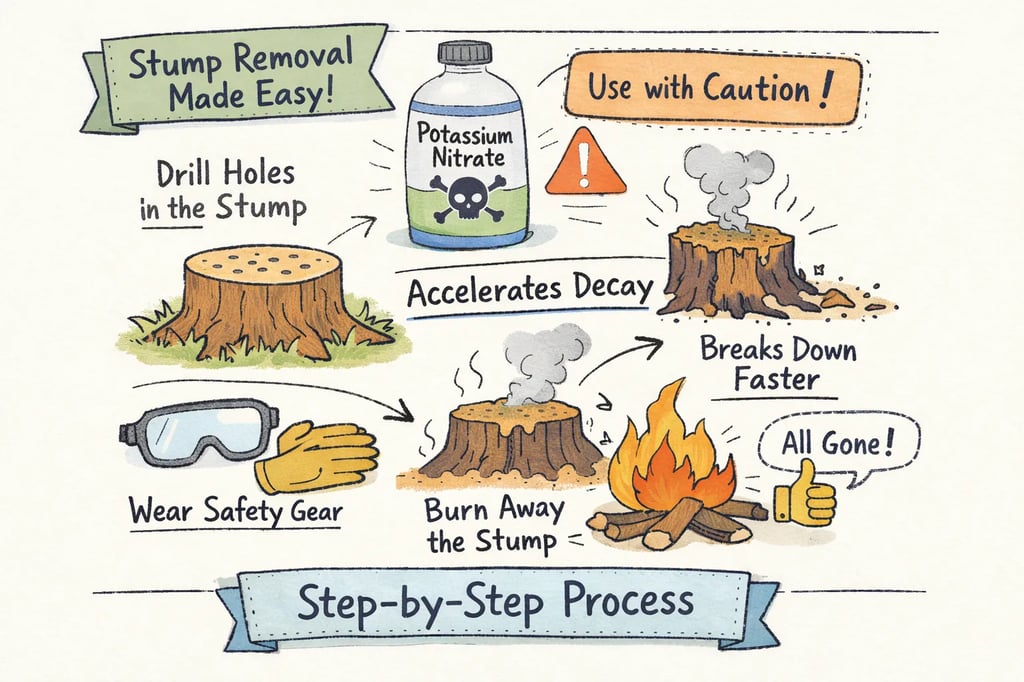
We get this question all the time—what’s the quickest, safest way to get rid of that old yard stump? This guide walks you through when a chemical rot accelerator makes sense, the exact steps pros use to apply potassium nitrate safely, the tools and dosing to buy, environmental and legal limits to watch, and faster alternatives when time or roots rule the decision. At Guilmer Tree Services we follow the same steps when a chemical treatment is the right fit—and we recommend grinding when it isn’t.
Is a nitrate stump treatment the right choice?
Start by answering six quick questions. First: what species is the stump? Softwoods (pine, poplar) break down much faster than dense hardwoods (oak, maple). Second: how big is it? Small stumps under about 12 inches diameter are the best candidates for a chemical approach. Third: is the stump green or seasoned? Older, dry stumps usually respond better.
Location matters. Don’t use oxidizing chemicals next to ponds, wells, drainage ditches, or where you plan heavy replanting immediately—the salts can affect soil and nearby plants. Time horizon is critical: if you need the spot clear in days or want to replant right away, chemicals are the wrong tool. Finally, think about reuse: if you want to plant a tree there soon, grinding gives a clean site.
Rules of thumb: small softwood stumps (≤12") are good candidates for potassium nitrate; dense hardwoods or any stump where you need quick, full root removal usually call for grinding. If you’re unsure, schedule an on-site visit. Guilmer Tree Services offers free estimates and an insured crew to assess the stump and recommend the fastest safe option.
Always read and follow the product label first. The sequence below is the practical workflow used by experienced crews — it emphasizes safety and predictable results. For a sample manufacturer product label and instructions you can reference the product label.
Cut the stump low. Use a chainsaw to reduce the stump to within a few inches of ground level. The lower the top, the easier drilling and penetration will be.
Drill holes. Use a 1‑inch spade bit (or 7/8" for very hard wood) with an extension. Drill vertical holes around the top about 3–4 inches in from the bark edge and spaced evenly. Add several angled side holes (slanting 30–45° about 3–4 inches down) so channels meet below the surface. Aim for depths in the 8–24 inch range — deeper for larger stumps. Rule of thumb hole counts: small stumps (≤12") → 6–8 holes; medium (12–24") → 10–20 holes; larger stumps → a honeycomb pattern.
Measure and pour the stump remover. Follow the label, but typical manufacturer guidance is about 4–6 ounces per hole (roughly 113–170 grams). Fill each hole three‑quarters to full depending on depth. Wear gloves, eye protection and a dust mask when handling granules.
Add hot or warm water. Pour warm water into each hole to dissolve the crystals and help them soak into the wood fibers. Keep holes moist for several weeks; re‑wet after dry spells.
Monitor and wait. Softwoods often soften in 4–8 weeks; small hardwoods may take several months; large hardwoods can take many months to a year. Test the wood with an axe or pry bar—when it yields easily you can chip or remove the softened material or grind the remainder.
Post‑treatment cleanup. Remove loose rotten wood, fill the cavity with topsoil or compost if you’re replanting, or arrange professional stump grinding for remaining root mass and a level surface.
Safety reminders: use PPE before drilling (gloves, goggles, dust mask), keep children and pets away during application, and do not mix stump remover with other household chemicals or fuels. While some labels mention kerosene and controlled burning as a later step, ignition is often unsafe or prohibited without permits — do not burn without checking local rules and professional supervision.
Commercial stump remover products are typically granular and contain high‑purity potassium nitrate. Labels vary, so follow the directions on the product you buy. Gordon’s and similar brands commonly contain 95–99% KNO3 and instruct roughly 4–6 ounces per hole; Hi‑Yield formulations follow the same principle but always check the label for exact dosing.
Measure by weight when possible: 4 oz ≈ 113 g and 6 oz ≈ 170 g. Granule density varies, so a kitchen scale or small postal scale gives consistent doses compared with cups or scoops.
1" spade bit + extension and cordless drill
Funnel or folded paper to pour granules into holes
Kitchen scale or measuring scoop for 4–6 oz per hole
Kettle of hot/warm water and a watering can
Gloves, safety glasses and dust mask
Tarp for catching spilled granules and cleanup
For safety documentation and handling guidance see the product SDS; many manufacturers publish a stump remover SDS you can review before use.
A safe, step‑by‑step application plan you can follow
Tools, dosing and product choices
Hazards, legal limits and environmental best practices
Potassium nitrate speeds microbial decay but is an oxidizing chemical — treat it with respect. Keep it dry in storage, locked away from children and pets, and follow SDS instructions for first aid: flush eyes for 15 minutes if contact occurs, wash skin with soap and water, and if ingested give water or milk and seek medical advice promptly.
Avoid treating stumps next to bodies of water, wells, or drainage ditches to prevent runoff. Do not pour leftover product into storm drains or waterways. Dispose of unused chemical and contaminated packaging at an approved waste facility per local rules — do not toss large quantities in household trash without checking municipal guidance. For official label and regulatory guidance you can reference the EPA pesticide label.
Check local burning and open‑fire regulations before considering any combustion step. Many Northern Virginia jurisdictions restrict open burning on small lots and require permits; call your local fire marshal or ask Guilmer Tree Services to advise. Also call 811 before any digging or mechanical root removal to locate buried utilities.
When potassium nitrate won’t cut it — safer, faster alternatives
Chemical treatment is inexpensive and low‑effort, but it’s slow and won’t remove roots. If you need the stump gone in days, want to replant immediately, or the stump is a dense hardwood or close to structures, choose a mechanical solution.
Stump grinding is the most common professional alternative: it removes the visible stump and most of the root collar quickly, leaves a usable mulch, and lets you replant or grade the site right away. For a practical look at grinding options and budgeting, see our piece on Tree Stump Grinding: Average Costs & Money‑Saving Tips | Guilmer Tree Services. Mechanical removal with an excavator removes all roots for construction but is disruptive—if you need full root removal, review our Root Grinding Near Me — Costs, Prep & a 5‑Point Checklist | Guilmer Tree Services.
Composting and biological approaches work slowly and unpredictably; for practical DIY methods on accelerating natural rot, see this how to rot tree stumps quickly guide. Avoid household “shortcuts” like salt or bleach — they can sterilize soil and harm surrounding plants without reliably removing the stump.
Next steps: timeline, quick safety checklist and when to call Guilmer Tree Services
Confirm species and measure stump diameter.
Buy a labeled potassium nitrate stump remover and read the label thoroughly. For an estimate of removal tradeoffs and pricing see ourStump Removal Cost in 2026: Per‑Inch Pricing & Savings | Guilmer Tree Services.
Gather tools and PPE, drill the recommended pattern and dose each hole per label.
Keep holes moist, monitor progress weekly, and plan for removal or filling once wood softens.
If you need the area cleared fast or the stump is large/hardwood, schedule professional grinding and review ourStump Removal Service: Costs, Questions & Pro Tips | Guilmer Tree Servicesfor what to expect.
Timeline cheat‑sheet: softwoods often soften in 4–8 weeks; small hardwoods may take several months; large hardwoods can take many months to a year. If speed, root removal, or immediate replanting matters, call a grinder. You can also hire the right stump grinding pro near you — costs & quotes through our service pages to get a fast onsite estimate.
Guilmer Tree Services is licensed and insured in Falls Church and Northern Virginia. We provide free onsite estimates, professional stump grinding, safe chemical treatments on request, and complete site cleanup. On an onsite visit we’ll inspect the stump, explain risks and timelines, recommend the fastest safe option, and give a transparent quote — including permit or burning guidance when needed.
Our Services
Tree Removal
Tree Trimming and Pruning
Stump Grinding
Bush Chipping
Hours & Information
© 2026. All rights reserved.
Monday to Friday : from 9:00 AM – 5:00 PM
on-site : from 8:00 AM – 6:00 PM