
🌳Root Grinding Near Me — Costs, Prep & a 5‑Point Checklist
Need root grinding near you? 🌳 Root grinding removes leftover roots and root balls quickly and cleanly, but costs vary widely based on root size, depth, access, and site conditions. Typical single‑root or stump‑root projects often range from a few hundred to over a thousand dollars depending on scope.
6 min read
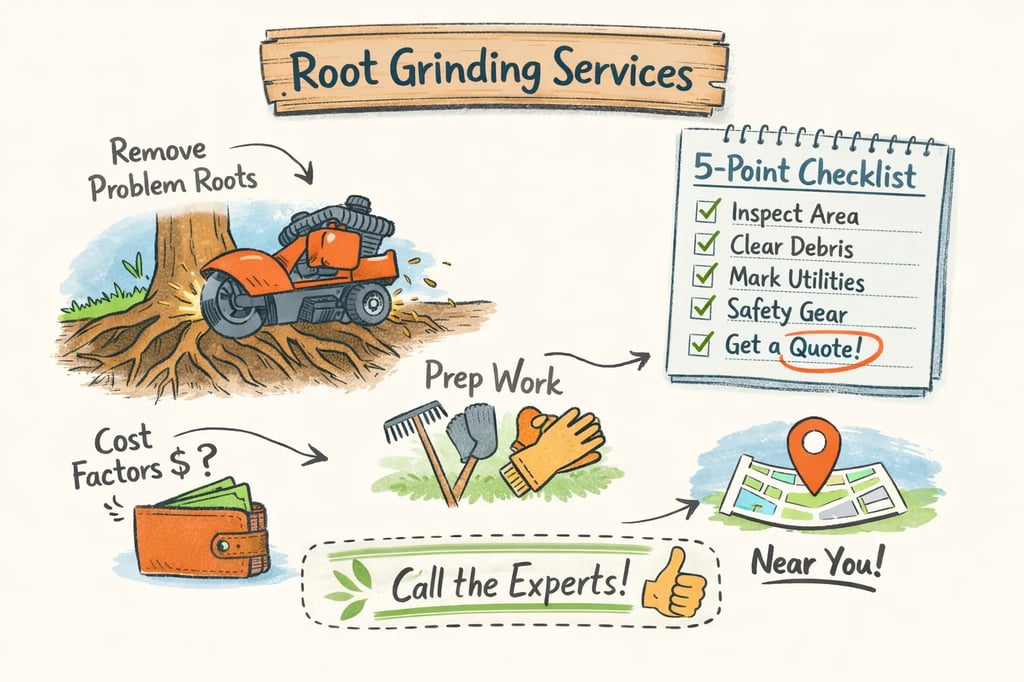
If a stump is ruining your lawn or blocking a build, here’s the straightforward local guide to what root and stump grinding costs, what it actually removes, and the five things you must check before you hire someone. Bottom line: expect professional jobs to fall roughly in the $175–$475 per‑stump range (typical per‑inch pricing runs about $2–$5 with minimum fees and extra charges for difficult access or deep roots). At Guilmer Tree Services in Falls Church we see the same surprises on estimates—this guide helps you avoid them and get a clean, safe finish.
Local cost guide: how pros price stump and root grinding
Contractors usually price grinding three ways: a per‑inch rate (most common), a flat per‑stump fee, or a job minimum that covers small calls. Per‑inch rates typically run $2–$5; most crews also enforce a minimum charge—usually $100–$150—to cover travel and setup. Regional factors affect the top and bottom of those ranges, so always get a local quote.
Practically speaking, expect these ballpark ranges by stump diameter: very small stumps (roughly up to 10") often run under $150; medium stumps (11–18") commonly land in the $100–$300 band; large stumps (19–30") usually cost $200–$600; and very large trunks or root balls can push $700+ or require excavation rather than grinding. National averages cluster around $250–$325 per stump, but Northern Virginia tends to match the $2–$5/inch guidance with minimums in place.
Difficult access — gates, fences, or narrow yards add time and often 20–50% to the price.
Surface vs. deep roots — chasing deep lateral roots or grinding extra depth is billed separately (commonly +$50–$350 depending on depth).
Multiple stumps — many companies discount additional stumps (25–50% off the first stump).
Travel and setup — short jobs can look expensive because crews factor truck time into a minimum.
Cleanup/haul‑away — leaving a chip pile is standard; hauling chips away is often an extra fee.
Stump removal/excavation — full removal is pricier and may be quoted separately from grinding.
Example: a 20" stump at $3.50 per inch looks like $70 on paper, but with a $100–$150 minimum and setup time most crews will quote $150–$250 unless it’s a very straightforward yard. Always ask for itemized pricing (per‑stump, per‑inch, minimum, add‑ons) so bids are comparable.
Stump grinders shred the visible trunk and cut many of the larger surface roots into chips. Typical professional grind depth is around 4–6 inches below grade for standard lawn work; some operators and larger machines can go deeper (8–12 inches or more) if you request it. For more detail on machine capabilities, see how deep does a stump grinder go.
Deeper lateral roots and portions farther out from the trunk remain in place; those roots will die and decompose over time—often years to a decade—sometimes causing minor settling or surface bumps as they break down. If your plan is to build a foundation, install a patio, or plant a new tree in the exact spot, full stump removal (excavation) is the sensible option despite higher cost and the hole it leaves. Likewise, serious root intrusion into sidewalks, driveways, or utilities, or active pest/disease concerns, are reasons to choose removal over grinding. If you need step‑by‑step guidance on removing roots and stump material, see this practical guide on how to remove tree and stump roots.
Safety note: grinding deeper near foundations, buried utilities, or neighboring trees can cause damage. A qualified crew will call 811 for locates when excavation or deeper root work is likely and will advise when removal—not grinding—is the safer path.
A standard residential grinding job normally includes basic site prep (clearing around the stump and cutting protruding trunk flush with a chainsaw), grinding to the agreed depth, and raking chips into a pile. Many crews leave the chips for reuse as mulch; hauling them away is usually a paid add‑on. Optional extras commonly offered are deeper grinding for root‑prone species, stump excavation, backfill and soil, and reseeding or sod installation—these add to time and cost. For further cost‑saving tips and average job breakdowns, check our Tree Stump Grinding: Average Costs & Money‑Saving Tips.
Time expectations: one small stump can take 15–60 minutes of on‑site time. Larger stumps, multiple stumps, tight access, or root extraction add hours. Remember: for very small jobs, setup and travel can dominate the bill, which explains minimum charges.
At Guilmer Tree Services we provide a free on‑site estimate, send a licensed and insured crew, grind to a reliable depth for lawn re‑use, leave a chip pile for homeowners or haul it away for a small fee, and tidy the site before we leave.
What stump and root grinding actually removes — when you’ll need full removal instead
What’s included, how long it typically takes, and common add‑ons
Prep and grind‑day expectations: a homeowner’s checklist
Preparing the site saves time and avoids surprises. Before the crew arrives, clear the work area and protect valuables. Call 811 if you or the contractor expect any digging or deep root work.
Remove toys, garden furniture, potted plants and lawn decorations from the area.
Park vehicles away from the work zone and move pet kennels or water bowls.
Cut low branches that impede machine access; mark irrigation heads, flower beds and other sensitive spots.
Confirm whether the contractor will call 811 for utility locates and who will apply for permits or HOA approvals if required. If you’re working in Falls Church, review local requirements on the Falls Church tree permits page.
What happens on grind day: the crew arrives, sets up safety barriers, confirms scope and grind depth with you, uses a chainsaw to make the stump flush if needed, operates the grinder (expect noise and flying chips), rakes chips into a pile and either leaves them or loads them for haul‑away, then walks the site with you for acceptance. Confirm the target depth and chip handling before work begins.
Aftercare: chips are usable as mulch around beds but are high in carbon—don't use them directly as planting soil. If the area is to be lawn, many homeowners prefer immediate backfill with screened topsoil and reseeding; if you plan to plant a tree in the same spot, wait 6–12 months or choose full removal up front.
License & insurance— Request a certificate of insurance (general liability and workers’ comp). Verify it’s current; do not hire a crew that refuses a COI.
Equipment & experience— Ask what grinder they’ll use and if they have tracked machines for tight yards. If you want help finding qualified crews or land‑clearing partners, see our page onfind and hire a local land‑clearing contractor.
Scope, depth & cleanup— Get the exact grinding depth in writing, whether surface roots will be addressed, and what cleanup or hauling is included.
Permits & safety checks— Confirm who calls 811, how they protect nearby structures and trees, and whether they handle any required municipal or HOA permits.
Written estimate, payment & guarantees— Insist on an itemized written quote, clear payment terms, and a simple follow‑up or warranty policy; be wary of large upfront cash demands.
Red flags: no insurance or refusal to provide a COI, vague answers about depth/scope, excessive deposit requests, and pricing that’s far below local averages without a clear explanation.
5‑point hiring checklist: questions to ask and red flags to watch for
Comparing quotes, sample scripts, and the next steps (plus a local option)
To compare bids, normalize them: convert each quote to a per‑stump or per‑inch basis and list add‑ons separately (chip hauling, deep grinding, removal). Check what each includes—depth, cleanup, hauling, and whether they provide a COI. Consider more than price: scope clarity, insurance, local reviews and lead time matter. For national price breakdowns and examples you can use to benchmark local quotes, see this stump grinding price guide, and for a deeper per‑inch analysis consult our Stump Removal Cost in 2026: Per‑Inch Pricing & Savings write‑up.
Quick scoring idea: weight price, scope clarity, insurance verification, reviews, and start date—pick the contractor with the best balance, not just the lowest price.
Sample phone script (one call): “Hi—I've got a 20‑inch oak stump in a front yard with driveway access. What’s your per‑inch rate and your minimum? Do you have liability insurance and a COI? What depth do you grind to, and do you haul chips away or leave them? Can you do an on‑site estimate?” Follow up by email asking for a written itemized estimate and a copy of the COI, attaching photos and the property address.
DIY vs hire: renting a stump grinder is reasonable for a single small stump if you have experience, a helper and a clear, isolated site. For large stumps, tight yards, or work near structures and utilities, hiring a licensed, insured crew is safer and often cheaper once you factor your time and risk.
If you’re in Falls Church or nearby and want a local crew to look at it, Guilmer Tree Services offers free on‑site estimates, licensed and insured crews, professional stump grinding and chip handling—we’ll walk the property with you, explain depth options, and send an itemized quote. To get started: photograph the stump(s), measure or estimate diameter, request three local quotes, and use the five‑point checklist on your first call. You can also request a local stump grinding quote through our site and we’ll arrange a visit.
Measure, photograph, call three pros, and check their COI—clear scope and a written estimate are the difference between a smooth job and a nasty surprise. If you want a local, licensed crew to take a look, request a free estimate from Guilmer Tree Services and we’ll come by to assess the job and answer your questions.
Our Services
Tree Removal
Tree Trimming and Pruning
Stump Grinding
Bush Chipping
Hours & Information
© 2026. All rights reserved.
Monday to Friday : from 9:00 AM – 5:00 PM
on-site : from 8:00 AM – 6:00 PM