
🌳Tested Stump Dissolvers: 7 Safe, Effective Picks for Yards
Looking for safe, effective stump dissolvers that actually work? Guilmer Tree Services tested seven reliable options homeowners can consider to accelerate stump decay or soften wood before grinding. This guide highlights product types, what each is best for, safety reminders, and when to call a pro so you get results without risking your yard or family.
7 min read
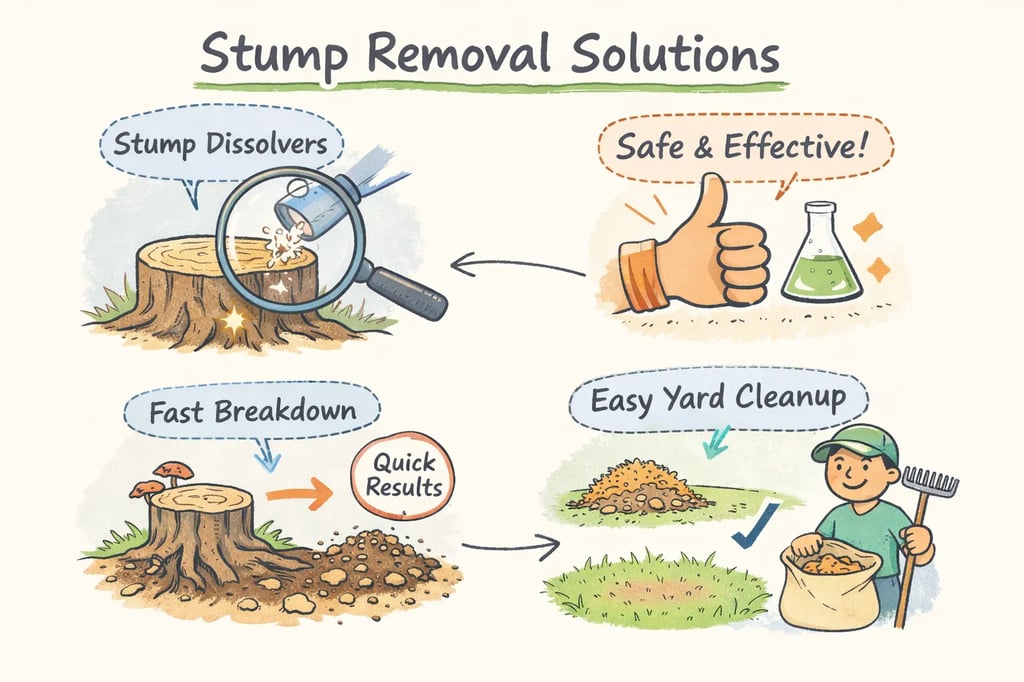
Homeowners hate stumps: they trip in the dark, spoil sightlines, and invite fungus and beetles. Guilmer Tree Services sees this every season in Falls Church, so here’s a neighborhood-level guide to what actually works—what speeds rot, what merely kills sprouts, how to apply products safely, realistic time and cost expectations, and when grinding is the smarter choice.
How stump removers work — basic chemistry and the choices you’ll face
There are two broad chemical approaches. One group accelerates decomposition by feeding wood‑decay microbes; the other kills the living tissue to prevent resprouting but does little to hasten rot.
Potassium nitrate (KNO₃) and sodium metabisulfite fall into the first camp. Potassium nitrate supplies nitrates that microbes use to break down lignin and cellulose, softening the wood over months. Sodium metabisulfite acts chemically on fibers and can have a similar effect. These products amplify a natural process—they don’t “eat” a stump overnight.
Herbicides like triclopyr and glyphosate target the cambium and root system to stop new sprouts. They’re reliable for preventing regrowth but won’t make a dense oak vanish faster. Salts and Epsom salt (magnesium sulfate) dehydrate tissue and can speed decay, but they also change soil chemistry and can harm nearby plants.
Realistic expectation: decomposition accelerants shorten nature’s timetable—softwoods (pine) respond faster than dense hardwoods (oak, maple). Always read the label and safety data sheet. If a stump is large, under a patio, or close to utilities, the slow, chemical route may be riskier than calling a grinder-equipped crew like Guilmer Tree Services.
Potassium nitrate granules (KNO₃) — Best general decomposer. Active ingredient: potassium nitrate. Typical cost: $10–40 per treatment bag. Speed: small 4–6 months; medium 6–12 months; large 12–18+ months. Pros: reliably speeds microbial rot when drilled into the stump; safe for surrounding soil when used per label. Cons: slow and requires drilling and moisture retention. Safety note: store securely; avoid ingestion and keep children/pets away. For a complete how‑to, seePotassium Nitrate for Stump Removal: Safe, Step‑by‑Step | Guilmer Tree Services.
Sodium metabisulfite products — Alternative decomposer where nitrates are restricted. Active ingredient: sodium metabisulfite. Typical cost: $20–50. Speed: similar to KNO₃, variable by product. Pros: effective where nitrate use is limited. Cons: fewer ready-made consumer brands; rapid oxidation can irritate skin/eyes. Safety note: use gloves and eye protection; follow label instructions.
Triclopyr-based cut‑stump herbicides — Best to kill and prevent sprouts. Active ingredient: triclopyr. Typical cost: $10–30 for concentrated formulas. Speed: kills cambium quickly but does not notably accelerate decay. Pros: excellent at preventing resprouts; useful when regeneration is the main concern. Cons: persistent in soil in some formulations; not a rot accelerator. Safety note: avoid drift and runoff; keep off desirable plants.
Glyphosate-based stump killers — Reliable root kill. Active ingredient: glyphosate. Typical cost: $10–30. Speed: variable for decomposition; root kill helps prevent regrowth. Pros: broadly available and effective for stopping sprouts. Cons: public concern about persistence and health risks; follow all label directions and local guidance. Safety note: apply only to cut surfaces and avoid contact with non-target vegetation. For a general overview of chemicals people commonly use on stumps, seewhat chemical is used to kill tree stumps.
Epsom salt (magnesium sulfate) — DIY rot aid. Active ingredient: magnesium sulfate. Typical cost: $5–20. Speed: slow; repeated applications over months. Pros: inexpensive and easy to source. Cons: changes soil chemistry, can stress nearby plants, and is less predictable than KNO₃. Safety note: avoid gardens and shallow-rooted ornamentals.
Rock salt / table salt — Cheap, risky option. Active ingredient: sodium chloride. Typical cost: $5–20. Speed: variable and often slow. Pros: low cost. Cons: high risk of killing surrounding vegetation and long-term soil damage; inconsistent results. Safety note: use only in isolated, non-planting areas and sparingly.
Biological/mechanical combo (compost + inoculants + moisture) — Slowest but lowest chemical footprint. Typical cost: $10–60 (compost/inoculants). Speed: many months to years. Pros: environmentally friendly, improves soil as it works. Cons: slow and not suitable when you need a stump gone quickly. Safety note: minimal chemical risk; protect site from pets while inoculants establish.
Pre-check: mark utilities and verify distance to gardens, wells, foundations, and septic lines. If the stump sits near structures, water lines, or a well, skip chemicals and call a professional. Check local burning and pesticide rules—Falls Church and many HOAs restrict burning and herbicide use.
Prepare: gather a 1.2" (30 mm) spade bit or hole saw, cordless drill, your chosen product (KNO₃ granules recommended for decay), warm water, tarp or heavy mulch, work gloves, safety glasses, and a pry bar or axe for later cleanup.
Drill holes: drill vertical holes 8–12" deep across the stump top. Space holes roughly 1–2" apart around the edge, then add a second ring 3–4" inward. For large stumps, add more holes and include angled side holes to create an internal network.
Fill: pour granules into each hole until about ¾ full. For liquid herbicides, apply to a fresh cut surface per label—do not dilute unless instructed.
Activate: slowly pour warm water into each hole to dissolve potassium nitrate and carry it into the wood. Allow the solution to soak in; visible granules should disappear after a few days.
Seal and retain moisture: cover the stump with a tarp, heavy mulch, or compost to keep moisture and microbes working. Reapply granules if visible after 2–3 weeks.
Wait and monitor: inspect every 4–8 weeks. Small stumps may become spongy in 4–6 months; hardwoods can take a year or more.
Remove: when the stump is soft, break it up with an axe or pry bar. Where legal and safe, some homeowners burn the remaining material once the chemical has dried (check local rules). Otherwise call a grinder to finish the job cleanly.
Safety & cleanup: wear gloves and eye protection, keep children and pets away from treated stumps, wash tools and hands after use, store leftover product locked and dry, and follow label disposal instructions. If ingestion or serious exposure occurs, contact Poison Control immediately.
The seven tested picks that actually work (what to use, when)
Safe, step‑by‑step application you can follow (measurements, tools, and PPE)
Timelines, costs, and realistic expectations by stump size and species
Stump Size Chemical Timeline Typical DIY Product Cost Recommended Approach
Small (<12" dia.) 4–6 months $10–30 DIY chemical workable; monitor
Medium (12–24") 6–12 months $30–60 Consider grinder rental or pro if you need speed
Large (>24") 12–18+ months High chemical needs Professional grinding usually best
Species matters: softwoods like pine will soften substantially faster than dense oaks or maples—expect to add 25–50% to timelines for hardwoods. Trade-off summary: chemicals are cheaper up front but slow and sometimes incomplete; grinding costs more but gives same‑day results and a clean site ready for replanting. Example: a 16" maple treated chemically might cost $30 in product and months of waiting; pro grinding runs roughly $150–$400 locally and the yard is ready in a few hours. For more on local and national price ranges, see this stump removal price guide. Also consult our detailed breakdown at Stump Removal Cost in 2026: Per‑Inch Pricing & Savings | Guilmer Tree Services.
Risks, environmental trade‑offs, and what to avoid
Chemical risks include accidental ingestion, skin and eye irritation, and groundwater leaching. Potassium nitrate is water‑soluble and can move toward wells and low areas; salts (rock salt, Epsom) can damage nearby plants and soil microbes. Herbicides can persist and harm non‑target vegetation if misapplied.
For authoritative information on nitrate movement and risks, see the EPA summary on nitrates, and for toxicity impacts particularly on grazing animals, see Montana State Extension's nitrate toxicity information.
Fire and legal issues: burning treated stumps may be illegal in many neighborhoods and unsafe near structures. Always check local ordinances and HOA rules before burning.
Mitigation: use the least persistent effective product, apply directly into drilled holes or to cut surfaces only, protect surrounding plants with barriers, and avoid use near wells, vegetable gardens, or potable water sources. When contamination risk is unacceptable, mechanical removal by a licensed crew is the right call.
When to hire a pro — quick decision guide and what Guilmer Tree Services does
Hire a pro if the stump is larger than 24", sits under or near structures, crosses utilities, or has extensive roots.
Hire a pro if you need the area regraded quickly for landscaping or construction.
Hire a pro if you’re uncomfortable handling chemicals or if the stump is in a sensitive area (well, garden, septic).
What Guilmer Tree Services provides: a licensed and insured crew with industrial grinders that cut roots and grind below grade, debris removal or chipping, site backfill and leveling, and safe disposal. We offer free on‑site estimates in Falls Church and surrounding neighborhoods and will advise whether chemicals, grinding, or a combination is the best solution for your yard — request a free on‑site estimate from Tree Removal, Trimming & Stump Grinding | Guilmer Tree Services. If you want prep and cost guidance specifically for grinding, see our Root Grinding Near Me — Costs, Prep & a 5‑Point Checklist | Guilmer Tree Services.
What to expect on service day
Our crew gives an arrival window, establishes a safety perimeter, grinds the stump typically 4–12" below grade depending on your goal, and cleans up chips (we can leave them as mulch or haul them away). A single accessible stump usually takes 1–3 hours; pricing varies by size and access—small jobs commonly run in the low hundreds, large or difficult stumps can be several hundred dollars. For practical tips on average grinding costs and saving strategies, see Tree Stump Grinding: Average Costs & Money‑Saving Tips | Guilmer Tree Services.
Case vignette: a stubborn oak stump in Falls Church
We were called to a 22" oak on a tight urban lot. Chemicals had been tried for a year with little change. We brought a grinder, set up a shielded work zone to protect a nearby foundation and hydrangeas, ground the stump below grade, hauled the chips to a pile for mulch, and finished with backfill and seed. The site was ready for planting the next week—no months of waiting, no risk to nearby plants.
Can I plant where a chemically treated stump once stood? Yes, but wait until the stump material is removed and the soil is tested or refreshed with topsoil if salts were used. Grinding and backfilling gives the fastest clean slate.
Is burning ever allowed? Sometimes, but many localities and HOAs ban open burning. Where allowed, burning carries fire risk and is best handled only after chemicals have fully dried and with local permits if required.
How deep does a grinder need to go to prevent regrowth? Grinding 4–12" below grade is typical; deeper grinding reduces the chance of resprouts and makes replanting easier.
Bottom line: for small stumps and low‑risk sites, potassium nitrate or a biological approach can work affordably but slowly. For large stumps, sites near structures, or when you need the area ready now, professional grinding is the faster, cleaner, and safer choice. If you’d like a local opinion, send photos or request a free on‑site estimate from Guilmer Tree Services—we’ll recommend the quickest, safest option for your yard.
Our Services
Tree Removal
Tree Trimming and Pruning
Stump Grinding
Bush Chipping
Hours & Information
© 2026. All rights reserved.
Monday to Friday : from 9:00 AM – 5:00 PM
on-site : from 8:00 AM – 6:00 PM